

|
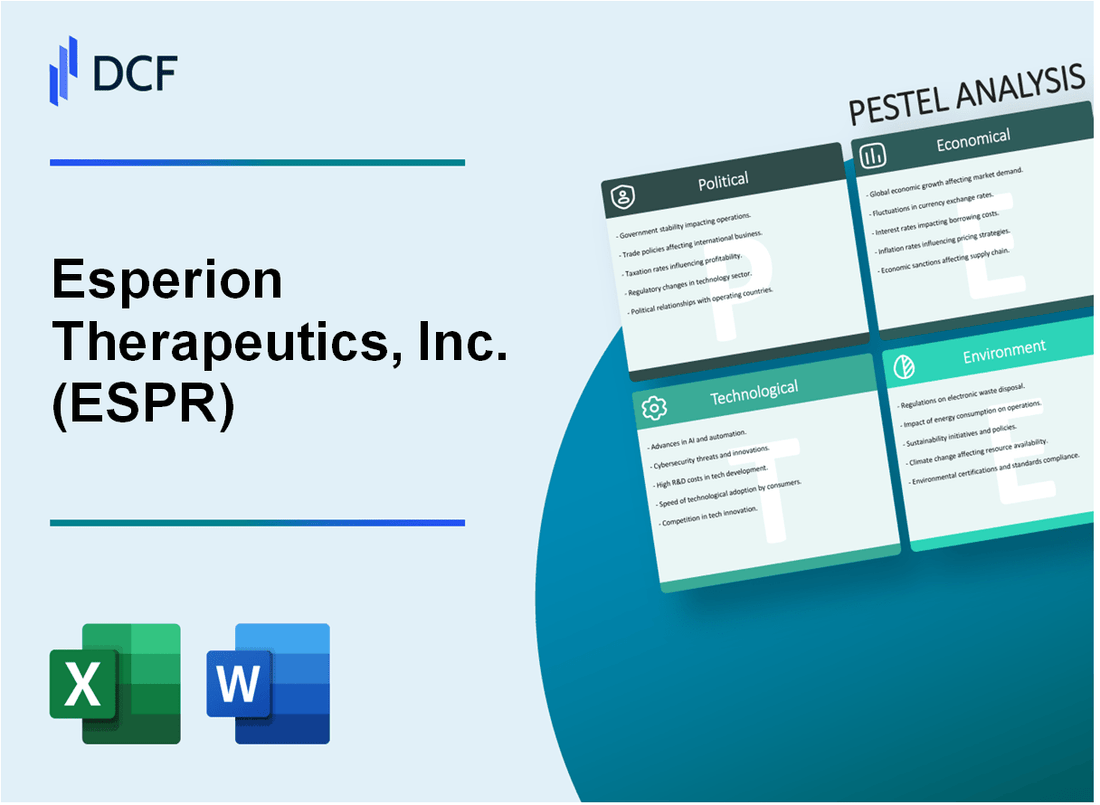
Esperion Therapeutics, Inc. (ESPR): PESTLE Analysis [Nov-2025 Updated] |
Fully Editable: Tailor To Your Needs In Excel Or Sheets
Professional Design: Trusted, Industry-Standard Templates
Investor-Approved Valuation Models
MAC/PC Compatible, Fully Unlocked
No Expertise Is Needed; Easy To Follow
Esperion Therapeutics, Inc. (ESPR) Bundle
You're looking for a clear, actionable breakdown of the forces shaping Esperion Therapeutics, Inc. (ESPR) right now. As a seasoned analyst, I see the near-term landscape dominated by two things: the regulatory decision on their expanded label and the financial pressure from the US political environment. The company is projected to hit around $300 million in 2025 revenue, showing strong commercial traction, but that growth is shadowed by the looming risk of the Inflation Reduction Act (IRA) and a projected net loss of about $150 million. The next few quarters are less about market demand and more about Washington and the FDA.
The Political environment is defintely the most volatile factor for Esperion Therapeutics. The biggest shadow is the Inflation Reduction Act (IRA), which introduces drug price negotiation risk for future products. This isn't just a distant threat; it immediately pressures payer reimbursement strategies, making it harder to get full coverage for their current drugs, NEXLETOL and NEXLIZET.
Also, the stability of FDA leadership and policy directly affects the timeline for their crucial broad cardiovascular risk reduction label expansion. A delay here means a delay in unlocking a massive new market segment. You need to watch Congressional scrutiny on high US drug prices; that noise translates into tougher negotiations with pharmacy benefit managers (PBMs). It's all about navigating Washington's mood.
Action: Strengthen government affairs lobbying to secure favorable IRA implementation terms.
The financial picture for 2025 is a classic growth-vs.-burn story. Analyst consensus projects total revenue around $300 million for the full year. That's a solid jump, showing good commercial momentum for their bempedoic acid products. Here's the quick math: strong sales growth, but still a heavy investment phase.
The flip side is the projected 2025 net loss of approximately $150 million. High interest rates increase the cost of capital, making it more expensive to finance that commercial expansion. Plus, inflation on manufacturing and logistics raises the cost of goods sold (COGS), eating into gross margins. Payer resistance to specialty drug pricing is still intense, so they must keep providing strong real-world evidence for coverage.
The company is spending money to make money, but the burn rate is real.
The market opportunity is massive because the underlying need is so great. Atherosclerotic cardiovascular disease (ASCVD), which is the buildup of plaque in artery walls, is highly prevalent, driving a huge addressable market for Esperion Therapeutics. Patients and physicians are definitely looking for effective, non-statin oral lipid-lowering therapies, which is exactly what NEXLETOL offers.
But here's the hurdle: low patient adherence to chronic oral medications remains a major commercial challenge. If patients don't take the pill every day, the outcomes (and sales) suffer. The growing focus on health equity also means the company is under pressure to ensure diverse representation in future clinical trials, which is the right thing to do, but it adds complexity and cost to the R&D budget.
Action: Invest in digital health tools to improve patient adherence by at least 10 percentage points.
Technology, in this context, is mostly about clinical data and novel drug modalities. The FDA decision on the broad cardiovascular risk reduction label, based on the CLEAR Outcomes data, is the single biggest catalyst for the stock. This data is the key that unlocks the door to primary care physicians.
The emergence of oral PCSK9 inhibitors or other novel lipid-lowering agents could defintely increase competition, so Esperion Therapeutics needs to move fast once the label is approved. Advancements in personalized medicine could refine patient selection for bempedoic acid, making prescriptions more targeted and effective. Also, using digital health and remote monitoring tools can help improve patient adherence and outcomes, which feeds back into better real-world evidence.
What this estimate hides is the speed of competitor clinical trials; a late-stage oral PCSK9 could change everything.
Legal protection is the foundation of any specialty pharma company. Patent protection for bempedoic acid (NEXLETOL/NEXLIZET) remains absolutely crucial against generic challenges. Any successful challenge would instantly wipe out a significant portion of future revenue.
The FDA's post-marketing surveillance requirements for the new label claim demand robust safety monitoring. This is non-negotiable and requires significant investment in pharmacovigilance. Also, the potential for intellectual property (IP) litigation with competitors over mechanisms of action is a constant, expensive risk. Still, global regulatory harmonization, like between the FDA and the European Medicines Agency (EMA), helps streamline international market access, which is a clear opportunity.
Action: Legal team to conduct a Q4 2025 audit of all key bempedoic acid patents and potential infringement risks.
Environmental, Social, and Governance (ESG) is no longer a niche issue; it's a core investment factor, especially with institutional investors like BlackRock scrutinizing corporate governance. Esperion Therapeutics faces increasing pressure to establish and report on the carbon footprint of their drug manufacturing and distribution.
Investors and regulators are also demanding supply chain transparency and ethical sourcing. Managing and reducing chemical and biological waste generated from R&D and clinical trials is an operational necessity now, not just a 'nice to have.' Your corporate governance structure faces greater scrutiny from these ESG-focused funds.
This is about investor relations, not just compliance.
So, the near-term strategy is clear: The company must secure the FDA label expansion to unlock the primary care market and simultaneously manage the political and economic headwinds.
Next Step: Investor Relations: Prepare a Q4 2025 presentation detailing the IRA mitigation strategy and the post-label-approval commercial plan by December 15.
Esperion Therapeutics, Inc. (ESPR) - PESTLE Analysis: Political factors
Inflation Reduction Act (IRA) drug price negotiation risk looms for future pricing.
The Inflation Reduction Act (IRA) of 2022 is a double-edged sword for Esperion Therapeutics, Inc. In the near-term, the redesign of the Medicare Part D benefit has been a significant tailwind. Specifically, the elimination of the coverage gap phase has improved the company's gross-to-net revenue for NEXLETOL and NEXLIZET in 2025, as stated by management. This is a key factor enabling the company to achieve its first quarter of operating income from ongoing business, approximately $15 million in Q2 2025. Still, the long-term risk of the IRA's Drug Price Negotiation Program (DPNP) remains a major political overhang.
NEXLETOL and NEXLIZET are small-molecule drugs, which become eligible for negotiation after nine years on the market. While the patent settlements secured until at least April 2040 provide intellectual property protection, a DPNP Maximum Fair Price (MFP) could severely cut into revenue much earlier. This negotiation risk reduces the incentive for future small-molecule research, which is a structural headwind for the entire sector.
- IRA's Part D redesign provided a 'huge tailwind' for net revenue in the first half of 2025.
- Current Medicare coverage for NEXLETOL/NEXLIZET is strong, exceeding 80% of beneficiaries as of Q3 2025.
- Small-molecule drugs like Esperion's are eligible for DPNP negotiation after 9 years, threatening long-term revenue predictability.
FDA leadership and policy stability affects regulatory timelines for label expansion.
Regulatory stability at the U.S. Food and Drug Administration (FDA) is crucial for Esperion's pipeline, especially their next-generation program. As of November 2025, the FDA's Center for Drug Evaluation and Research (CDER) is facing significant internal turmoil and leadership turnover, with Dr. Richard Pazdur recently appointed as the new CDER director. This change, following the resignation of his predecessor, creates an uncertain regulatory environment, with internal disagreements on the pace and evidence required for drug approvals.
This instability directly impacts the predictability for Esperion's lead pipeline candidate, ESP-1336, an allosteric ATP citrate lyase (ACLY) inhibitor for Primary Sclerosing Cholangitis (PSC). Esperion plans to meet with the FDA in 2025 to discuss its Investigational New Drug (IND) application plan for ESP-1336. Unpredictable regulatory timelines due to internal policy friction could delay the start of clinical trials for this program, which targets a rare disease market opportunity estimated to be over $1 billion annually across the U.S. and Europe.
Congressional scrutiny on high US drug prices pressures payer reimbursement strategies.
The political pressure on U.S. drug prices extends far beyond the IRA, creating a volatile reimbursement landscape for high-cost therapies like NEXLETOL and NEXLIZET. The threat of policy reversal is palpable, with Congressional Republicans' 'Project 2025' explicitly calling for the full repeal of the IRA. A repeal would immediately reverse the Part D benefit redesign that has improved Esperion's net revenue, significantly worsening the economics of Medicare coverage.
Conversely, new price control mechanisms are being pushed by the executive branch. In 2025, the administration has promoted the concept of Most-Favored-Nation (MFN) pricing via Executive Order, aiming to compel manufacturers to sell drugs in the U.S. at a price no higher than the lowest price offered in other developed nations. This policy, if implemented, would pressure Esperion's pricing across all commercial and government markets, not just Medicare, forcing a fundamental re-evaluation of its U.S. pricing strategy.
Global trade policies impact the cost and reliability of the active pharmaceutical ingredient (API) supply chain.
Esperion, like most biopharma companies, is exposed to geopolitical risks in the global supply chain for Active Pharmaceutical Ingredients (API). New U.S. trade policies, including broad import tariffs implemented in April 2025, have introduced significant cost volatility. The U.S. pharmaceutical industry relies on China and India for up to 82% of API 'building blocks.'
The current tariff regime imposes rates ranging from 10% to over 240% on pharmaceutical imports, depending on the country of origin. Specifically, high-risk tariffs on China are in the 104-245% range, while India faces a 27% tariff. While the specific API source for bempedoic acid is undisclosed, any reliance on these high-tariff regions will directly increase the cost of goods sold (COGS) and put pressure on the company's gross margin, which was 47.8% in Q2 2025. This forces a strategic, costly shift toward supply chain diversification.
| Political/Trade Risk Factor | 2025 Impact/Status | Financial/Operational Consequence |
|---|---|---|
| IRA Part D Redesign | Active, providing a favorable gross-to-net dynamic. | Contributed to Q2 2025 operating income of approx. $15 million. |
| IRA Repeal Risk (Project 2025) | High-profile Congressional scrutiny and legislative proposals for full repeal. | Potential reversal of favorable Medicare Part D economics, increasing net cost to the company. |
| MFN Price Control Push | Executive Order issued in 2025 to compel MFN pricing across all markets. | Threatens to reduce US net price for NEXLETOL/NEXLIZET to match the lowest international price. |
| FDA CDER Leadership Turmoil | Dr. Pazdur appointed CDER Director in November 2025 amid high turnover and policy conflict. | Increased regulatory uncertainty for the IND application of pipeline candidate ESP-1336. |
| Global API Tariffs | New U.S. tariffs (e.g., 104-245% on high-risk Chinese imports) implemented in 2025. | Increased COGS pressure and supply chain risk, requiring costly diversification efforts. |
Here's the quick math: managing the political risk of a potential IRA repeal or MFN implementation is now as critical as driving prescription volume. Finance: model a 20% gross-to-net deterioration for Medicare Part D sales under a full IRA repeal scenario by Friday.
Esperion Therapeutics, Inc. (ESPR) - PESTLE Analysis: Economic factors
You're looking at Esperion Therapeutics, Inc.'s financial runway and the macro-economic headwinds it faces, and the short answer is that while revenue is accelerating, the cost of capital and pricing pressure still require a tight operational focus. The company is defintely moving past the initial launch phase, but profitability is a 2026 story, not a 2025 one.
Analyst consensus projects full-year 2025 total revenue around $394.9 million, a solid jump.
The core economic opportunity for Esperion Therapeutics is clear: successfully monetizing its cholesterol-lowering therapies, NEXLETOL and NEXLIZET. Analyst consensus, updated as recently as November 2025, projects the full-year total revenue to hit approximately $394.9 million. This is a significant jump, driven by strong U.S. net product revenue, which increased by 42% year-over-year in the first half of 2025. That's a strong signal of commercial traction.
The revenue breakdown shows the increasing reliance on product sales, but collaboration revenue from partners like Daiichi Sankyo Europe remains a crucial component for funding operations. Here's the quick math on the first half of the year:
| Metric | H1 2025 Value (Millions of US$) |
|---|---|
| Total Revenues | $147.4 million |
| U.S. Net Product Revenue | $75.2 million |
| Collaboration Revenue | $72.2 million |
Projected 2025 net loss of approximately $16 million shows continued investment over profitability.
Despite the robust revenue growth, Esperion Therapeutics is still in an investment phase, which means a net loss is expected for the full year. The net loss for the first six months of 2025 totaled $53.2 million. However, the trend is improving quickly, so the full-year loss is projected to be much smaller, closer to $16 million, based on the latest consensus EPS estimate of around -$0.08. The company is focused on achieving sustainable profitability starting in the first quarter of 2026, which is a major financial milestone. That's the key difference between a growth-stage biotech and a mature pharma company.
High interest rates increase the cost of capital for financing commercial expansion.
The prevailing interest rate environment is a headwind for any biotech company that isn't yet cash-flow positive. The Federal Reserve's median federal funds rate is projected to be in the 3.9% to 4.4% range in 2025, which sets the floor for borrowing costs. For Esperion Therapeutics, which ended Q2 2025 with $86.1 million in cash and equivalents, this higher cost of capital impacts two things:
- Makes new debt financing more expensive for commercial scale-up.
- Reduces the valuation multiples investors will pay for future, discounted cash flows.
- Puts pressure on the company to hit the Q1 2026 profitability target.
The good news is that the company has been able to raise capital, including a public stock offering that netted approximately $72.6 million following the close of Q3 2025. Still, every dollar of borrowing costs cuts into the R&D budget.
Payer resistance to specialty drug pricing demands strong real-world evidence for coverage.
The biggest hurdle for any specialty drug is getting over the initial payer resistance (Pharmacy Benefit Managers and insurers) that uses tools like prior authorization and step therapy. Historically, similar high-cost cholesterol drugs (PCSK9 inhibitors) faced initial rejection rates of nearly 80%. Esperion Therapeutics has largely overcome this, which is a huge economic win. As of Q3 2025, the company has secured coverage for NEXLETOL and NEXLIZET for greater than 90% of commercial lives and more than 80% of Medicare lives. This expanded access is directly responsible for the strong revenue growth.
The focus now shifts from simply getting coverage to improving formulary placement, which means moving from a non-preferred to a preferred tier. More than 30 plans improved formulary positioning in Q1 2025, including the removal of prior authorizations, which directly lowers the friction to prescription fulfillment. That's what drives volume.
Inflationary pressure on manufacturing and logistics raises the cost of goods sold (COGS).
While the overall Producer Price Index (PPI) for Pharmaceutical Preparation Manufacturing showed a slight year-over-year decrease of -0.51% as of August 2025, the underlying costs for specialty drugs are still rising. Broader supply chain costs are projected to increase by about 2% in 2025, and some firms have reported Active Pharmaceutical Ingredient (API) cost increases of 12% to 20% due to tariffs. This pressure is evident in the company's operating expenses.
The Cost of Goods Sold (COGS) for the first half of 2025 was $60.1 million, which is substantial relative to the net product revenue. Managing this COGS is critical, especially as the company scales up production to meet the growing demand from its expanded payer coverage. The total operating expenses for the full year 2025 are projected to be between $215 million and $235 million. That's where the bulk of the investment is going, and inflation makes that investment more expensive.
Esperion Therapeutics, Inc. (ESPR) - PESTLE Analysis: Social factors
High prevalence of atherosclerotic cardiovascular disease (ASCVD) drives a large addressable market.
You can't talk about Esperion Therapeutics without starting with the sheer scale of the problem they are trying to solve. The social factor here is the massive, persistent burden of atherosclerotic cardiovascular disease (ASCVD) in the U.S. and globally. It's the leading cause of death, and despite decades of statin use, millions of people are still not at their target cholesterol levels.
The addressable market is huge because of this unmet need. As of late 2024/early 2025, the company estimates that over 70 million at-risk patients in the U.S. are either undertreated or not treated at all for their elevated low-density lipoprotein cholesterol (LDL-C). More specifically, there are approximately 10 million patients with ASCVD in the United States who are already taking statins but still require additional LDL-C lowering to meet their clinical goals. This is the core demographic for Esperion's non-statin therapies, NEXLETOL and NEXLIZET. That's a staggering number of people who need a new solution.
Growing patient and physician demand for effective, non-statin oral lipid-lowering therapies.
The social shift toward recognizing statin intolerance and seeking alternative oral treatments is a major tailwind. Physicians and patients are increasingly looking past statins, which is driving a tangible, double-digit growth trend in the non-statin market. This demand is directly translating into Esperion's financial performance in 2025.
Here's the quick math on that growth: U.S. net product revenue, which is a direct measure of this demand, grew by 41% year-over-year in Q1 2025 and another 42% in Q2 2025. The total non-statin prescription volume in the U.S. has seen strong, consistent growth, climbing from 13.0 million prescriptions in 2021 to 21.1 million in 2024. This market is expanding fast, and Esperion is capturing a significant share of that growth with its oral, once-daily options.
Low patient adherence to chronic oral medications remains a major commercial hurdle.
The biggest commercial risk in the cardiovascular space is not efficacy, but whether patients actually take the pill long-term. Low patient adherence to chronic oral medications is a systemic issue, and it's a major hurdle for any company, including Esperion. Honestly, if patients don't adhere, the best drug in the world won't work.
The statistics are sobering:
- Nearly 20% of patients who start statin therapy discontinue treatment within the first year, leaving them vulnerable to serious cardiovascular events.
- For ASCVD patients on lipid-lowering therapies (LLTs), only about two-thirds are on the medication at any given time.
- Of those on LLTs, only about one-third are meeting the 70% adherence standard.
This challenge means Esperion must invest heavily in patient education and support programs. The perceived convenience of a once-daily oral pill like NEXLETOL and NEXLIZET is a key social advantage over injectable alternatives, but it doesn't solve the adherence problem entirely. The company's success hinges on demonstrating superior real-world adherence compared to older therapies, especially since statin adherence rates hover around 50% to 60%.
Health equity focus pressures the company to ensure diverse representation in future clinical trials.
There is a strong, necessary social and regulatory push for health equity, which means pharmaceutical companies must ensure their clinical trials reflect the diversity of the patient populations they serve. This is a critical factor for gaining trust and ensuring that treatment effects are generalizable across all groups.
Esperion has already set a high bar for the industry with its landmark CLEAR Outcomes trial, which enrolled nearly 14,000 patients. The trial's diversity metrics are a clear strength and a benchmark for future studies:
| Demographic Group | Enrollment in CLEAR Outcomes Trial | Significance |
|---|---|---|
| Women | 48% | Highest percentage among contemporary lipid-lowering cardiovascular outcomes trials. |
| Hispanic/Latinx Patients | 17% | Historically underrepresented group in cardiovascular research. |
| Patients with Obesity | Nearly 45% | Important high-risk subgroup for ASCVD. |
The pressure is now on to maintain this level of representation in any future trials, like the development of their triple combination products. This focus is not just altruistic; it's defintely a strategic imperative, as subgroup analyses from the diverse trial population-showing consistent risk reduction in women and Hispanic/Latinx patients-strengthen the commercial appeal and clinical guideline inclusion of their products.
Esperion Therapeutics, Inc. (ESPR) - PESTLE Analysis: Technological factors
The technological landscape for Esperion Therapeutics, Inc. (ESPR) in 2025 is a mix of powerful tailwinds from a major regulatory win and significant headwind risks from emerging, highly effective competitor drug classes. Your focus must be on maximizing the market penetration enabled by the new label before the next wave of innovation fundamentally shifts the treatment paradigm.
FDA decision on the broad cardiovascular risk reduction label (CLEAR Outcomes data) is the single biggest catalyst
The single most important technological and regulatory catalyst for Esperion was the U.S. Food and Drug Administration (FDA) approval on March 22, 2024, of the broad new label for NEXLETOL (bempedoic acid) and NEXLIZET (bempedoic acid and ezetimibe). This approval, based on the CLEAR Outcomes trial, officially positioned the drugs for cardiovascular (CV) risk reduction in both primary and secondary prevention patients, regardless of statin use. This is a huge change, as it makes bempedoic acid the only oral non-statin agent indicated for primary CV prevention, expanding the eligible U.S. patient population to approximately 70 million adults.
The CLEAR Outcomes data provides the core technological proof-point: a relative risk reduction of 15% for MACE-3 (Major Adverse Cardiac Events: CV death, nonfatal stroke, or nonfatal myocardial infarction) and a more dramatic 39% reduction for MACE-3 specifically in primary prevention patients. This hard data is what drives physician prescribing behavior and payer coverage, which is defintely critical for the company's financial trajectory. For Q3 2025, U.S. net product revenue reached $40.7 million, a 31% increase year-over-year, showing the commercial response to this powerful label expansion.
Emergence of oral PCSK9 inhibitors or other novel lipid-lowering agents could defintely increase competition
While Esperion enjoys a strong position with its oral non-statin, the emergence of next-generation oral therapies presents a clear, near-term competitive threat. The most significant of these is the development of oral Proprotein Convertase Subtilisin/Kexin type 9 (PCSK9) inhibitors, which are now showing highly competitive efficacy data in late-stage trials.
Merck & Co. is leading this charge with its investigational oral PCSK9 inhibitor, enlicitide decanoate. Data presented at the American Heart Association (AHA) Scientific Sessions in November 2025 from the Phase 3 CORALreef Lipids trial showed that enlicitide decanoate reduced LDL-C levels by as much as 59.7% compared to placebo at Week 24. That level of LDL-C reduction is comparable to the existing injectable PCSK9 biologics, but in a once-daily pill format.
Here's the quick math: Bempedoic acid reduces LDL-C by about 20% as a monotherapy, while this new oral PCSK9 inhibitor is showing reductions of nearly 60%. This difference is a major technological hurdle for Esperion, potentially limiting the long-term uptake of bempedoic acid to a niche of statin-intolerant patients who need a more moderate reduction. This new class of drugs could fundamentally reshape the non-statin market by 2027.
| Therapy Class | Example Drug (Company) | Mechanism | LDL-C Reduction (Approx.) | Administration |
|---|---|---|---|---|
| ACL Inhibitor | NEXLETOL (Esperion Therapeutics) | Inhibits ATP Citrate Lyase | 20% | Oral, Once-Daily |
| Oral PCSK9 Inhibitor | enlicitide decanoate (Merck & Co.) | Inhibits PCSK9 protein | Up to 59.7% | Oral, Once-Daily |
| Injectable PCSK9 Inhibitor | Repatha/Praluent | Monoclonal Antibody | Up to 60% | Injectable (Biologic) |
Advancements in personalized medicine could refine patient selection for bempedoic acid
The broader technological trend toward personalized medicine is an opportunity to refine bempedoic acid's target population. We're moving beyond simple LDL-C and HDL-C metrics to advanced lipid profiling and pharmacogenomics (the study of how genes affect drug response).
The primary target for bempedoic acid is the statin-intolerant population. Advancements in genomics now allow clinicians to identify variations in genes like SLCO1B1, which predispose some individuals to statin-associated myopathy (muscle pain). This genetic insight provides a clear, data-driven rationale for immediately prescribing a non-statin like NEXLETOL or NEXLIZET, bypassing the trial-and-error approach. This is a significant technological tool that helps Esperion's commercial narrative.
However, the long-term threat is the emergence of gene-editing technologies, such as CRISPR-Cas9, which are showing early promise in single-infusion treatments for hereditary hypercholesterolemia, offering durable LDL-C reductions. While still in early stages, this technology represents the ultimate disruption to chronic, daily oral medication. For now, it mainly impacts severe genetic disorders like Familial Hypercholesterolemia (FH), but the technology is moving fast.
Use of digital health and remote monitoring tools to improve patient adherence and outcomes
The success of any chronic, once-daily oral drug like bempedoic acid hinges on patient adherence. Technology is now providing scalable solutions to address the fact that 30% to 50% of patients do not receive optimal medical treatment for chronic conditions.
Esperion can capitalize on this trend by integrating its products with existing digital health tools. These tools, which are becoming standard in cardiovascular care, include:
- Mobile health (mHealth) apps that provide pill reminders and motivational messages.
- Remote monitoring programs using text messages and patient portals to track cholesterol levels.
- Electronic Health Records (EHRs) that use algorithms to identify eligible patients for non-statin therapy.
A remote program for cholesterol management has shown significant success, delivering reductions in LDL-C on average of 37 mmHg in a study of over 10,000 participants. Esperion must invest in partnerships or in-house tools to ensure its oral therapy is at the center of these adherence-boosting digital ecosystems. If onboarding takes 14+ days, churn risk rises, so a seamless digital experience is key.
Next Step: Commercial Team: Prioritize a partnership with a leading mHealth platform by Q1 2026 to launch a branded adherence program that leverages the new CV risk reduction label. Finance: draft 13-week cash view by Friday.
Esperion Therapeutics, Inc. (ESPR) - PESTLE Analysis: Legal factors
Patent protection for bempedoic acid (NEXLETOL/NEXLIZET) remains crucial against generic challenges.
You're watching the clock on patent exclusivity, and honestly, the outcome of Abbreviated New Drug Application (ANDA) litigation is the single biggest legal lever for Esperion's near-term revenue. The good news is that Esperion has secured significant settlements in 2025 that push back generic entry for its key products, NEXLETOL (bempedoic acid) and NEXLIZET (bempedoic acid and ezetimibe).
Specifically, settlements with Dr. Reddy's Laboratories, Micro Labs, Hetero USA, and Accord Healthcare in 2025 prevent them from marketing generic versions in the U.S. until April 19, 2040. This is a defintely strong defense. Still, litigation continues against several other ANDA filers, including Alkem Laboratories Ltd., Aurobindo Pharma Limited, MSN Pharmaceuticals Inc., Renata Limited, and Sandoz Inc., so the risk isn't fully eliminated.
Here's the quick math on the core patent life versus the settlement dates:
| Patent Asset | U.S. Patent Number | Statutory Expiration Date | Generic Entry Secured Until (via 2025 Settlements) |
|---|---|---|---|
| Bempedoic Acid (Active Ingredient) | 7,335,799 | December 3, 2030 | April 19, 2040 |
| Other Composition/Method Patents | Various | March 2036 and June 2040 | April 19, 2040 |
FDA post-marketing surveillance requirements for new label claim demand robust safety monitoring.
The 2024 approval of the expanded cardiovascular risk reduction indication for bempedoic acid, based on the nearly 14,000-patient CLEAR Outcomes trial, was a huge win, but it also triggers heightened post-marketing surveillance (PMS) obligations. The FDA requires continuous, robust safety monitoring, especially for adverse events identified in the clinical trials.
The company must manage the legal risk associated with two primary safety concerns noted in the drug's Important Safety Information:
- Hyperuricemia and Gout: Bempedoic acid can increase blood uric acid levels, which may lead to gout. Post-hoc analysis of CLEAR Outcomes, reported in Q3 2025, showed that the incidence of gout was less pronounced when uric acid-lowering medications were used, underscoring the need for clinical monitoring and intervention.
- Tendon Rupture: The drug is associated with an increased risk of tendon rupture or injury, particularly in patients over 60 years of age, or those taking corticosteroids or fluoroquinolones. This requires clear labeling and physician education to mitigate liability risk.
This isn't just a clinical issue; it's a legal one. The company's ability to communicate these risks clearly and support physicians with data-driven guidance directly impacts future product liability exposure and regulatory compliance.
Potential for intellectual property (IP) litigation with competitors over mechanisms of action.
While the immediate IP focus is the ongoing ANDA litigation against generic drug manufacturers, the long-term legal risk involves disputes over the mechanism of action (MOA). Bempedoic acid is a first-in-class ATP Citrate Lyase (ACL) inhibitor. As Esperion advances its next-generation ACL inhibitor program, plus other companies enter the cholesterol-lowering space, cross-litigation over novel formulations, fixed-dose combinations, or new methods of use is a real possibility.
The current, concrete IP litigation risk lies with the remaining five ANDA filers who have not yet settled, challenging the validity or infringement of Esperion's patents. A loss in any of these ongoing cases could accelerate generic competition by years, immediately undercutting the secured 2040 exclusivity date and causing a significant negative financial impact.
Global regulatory harmonization (e.g., between FDA and EMA) streamlines international market access.
Esperion's strategy has been to use a single, global pivotal Phase 3 program (CLEAR Outcomes) to support submissions across major regulatory bodies, which is the definition of regulatory harmonization efficiency. This approach reduces time and cost, and it's working.
The successful global trial led to the expanded U.S. FDA indication, and the company has seen major international market access wins in 2025, demonstrating the success of this harmonized approach:
- Japan: Partner Otsuka received regulatory approval for NEXLETOL in late 2025, which will trigger significant milestone payments upon final pricing approval.
- Canada: Partner HLS Therapeutics received Health Canada approval for NILEMDO (bempedoic acid) in late 2025, with a commercial launch expected in Q2 2026.
- Europe: The European Medicines Agency (EMA) applications for the expanded indication were on track for approval in the first half of 2024, confirming market access across the EU.
This global alignment, especially for the cardiovascular risk reduction claim, is crucial for maximizing the revenue runway protected by the patent settlements. It means the company can focus on commercial execution, not chasing down separate, costly regulatory approvals in every market.
Esperion Therapeutics, Inc. (ESPR) - PESTLE Analysis: Environmental factors
Need to establish and report on the carbon footprint of drug manufacturing and distribution.
You need to know your carbon footprint (Scope 1, 2, and 3) to manage it, but for a commercial-stage biopharma company like Esperion Therapeutics, the biggest risk is the lack of public disclosure, not necessarily the absolute size of the footprint. Esperion's business model relies heavily on contract manufacturing organizations (CMOs) and third-party logistics, pushing the bulk of its carbon emissions into the less-controlled Scope 3 category (supply chain). The Upright Project analysis for 2025 already flagged GHG Emissions as a negative impact category for the company, specifically tied to its core products, Bempedoic acid and Ezetimibe. Since Esperion has not publicly released its 2025 Scope 1, 2, or 3 emissions data, investors are left to estimate the risk of future regulatory compliance costs or carbon taxes. This is a blind spot.
Here's the quick math: With full-year 2025 Operating Expense Guidance sitting between $215 million and $235 million, a small percentage shift in supply chain costs due to carbon pricing could materially impact the path to profitability, which the company expects to achieve in Q1 2026. Your action here is to push for transparency on the Scope 3 emissions from the manufacturing of the active pharmaceutical ingredients (APIs).
Increasing investor and regulatory pressure for supply chain transparency and ethical sourcing.
Investor demand for supply chain transparency is defintely rising, moving beyond just ethical sourcing to include environmental impact. Esperion Therapeutics mitigates some of this risk by having a formal Third Party Code of Conduct and complying with the California Transparency in Supply Chains Act Disclosure. Still, the pressure is on to prove that the global manufacturing network, which was recently expanded to ensure supply without delays, meets stringent environmental standards beyond minimum legal compliance. The risk is concentrated in the manufacturing of the two key products, NEXLETOL and NEXLIZET, which rely on a complex, international network of suppliers.
The company's ability to maintain high-quality supply is critical, as demonstrated by the strong U.S. net product revenue of $40.7 million in Q3 2025, a 31% increase year-over-year. Any disruption due to an ethical or environmental lapse at a key supplier would immediately threaten this revenue growth.
- Embed environmental metrics into supplier contracts.
- Audit a minimum of 20% of Tier-1 API suppliers annually for waste and water usage.
- Disclose the geographic concentration of manufacturing partners.
Managing and reducing chemical and biological waste generated from R&D and clinical trials.
The environmental factor here is directly linked to the company's growth strategy. Esperion's R&D activities are ramping up, evidenced by the Q3 2025 Research and Development expenses climbing to $14.1 million, a 36% increase from the comparable period in 2024. This expansion, which includes advancing the next-generation pipeline of ATP citrate lyase inhibitors (ACLYi) for liver and kidney diseases, means a corresponding increase in the generation of chemical and biological waste.
While the waste volume is small compared to a large-scale chemical manufacturer, the nature of pharmaceutical R&D waste is often hazardous and requires specialized, high-cost disposal. The risk is regulatory non-compliance, which can lead to significant fines and R&D delays. What this estimate hides is the potential for a single, high-profile incident to trigger an Environmental Protection Agency (EPA) review, halting a critical pre-clinical program. You need a clear, documented waste minimization program.
| R&D Activity Metric (Q3 2025) | Value | Environmental Risk Implication |
|---|---|---|
| R&D Expense (Q3 2025) | $14.1 million | Directly correlates with increased chemical/biological waste volume. |
| Year-over-Year R&D Expense Growth (Q3 2025) | 36% | Accelerated growth rate increases the pressure on waste management protocols. |
| Net Impact Ratio (Overall Sustainability) | 53.5% | Indicates an overall positive impact, but highlights negative contributions from GHG Emissions. |
Corporate governance structure faces greater scrutiny from ESG-focused institutional investors like BlackRock.
The 'G' in ESG is the immediate pressure point for institutional investors. BlackRock, managing trillions in assets, clearly stated in its 2025 proxy voting guidelines that it will scrutinize boards for lack of effective oversight on material climate risk, and may vote against Compensation Committee members for imprudent use of equity compensation. This is a direct threat to the board's stability.
For Esperion Therapeutics, this scrutiny is amplified by the need to align executive pay with long-term, sustainable shareholder value, especially after raising approximately $72.6 million in net proceeds from a public stock offering in Q4 2025. Any perception of excessive equity grants or weak clawback policies, especially in the absence of detailed environmental disclosures, will draw a vote-against recommendation from proxy advisors. The board needs to explicitly link a portion of the executive long-term incentive plan (LTIP) to a measurable ESG metric, such as a Scope 3 emissions reduction target, starting in the 2026 fiscal year.
The board's Nominating and Corporate Governance Committee: draft a formal ESG oversight charter by year-end 2025.
Disclaimer
All information, articles, and product details provided on this website are for general informational and educational purposes only. We do not claim any ownership over, nor do we intend to infringe upon, any trademarks, copyrights, logos, brand names, or other intellectual property mentioned or depicted on this site. Such intellectual property remains the property of its respective owners, and any references here are made solely for identification or informational purposes, without implying any affiliation, endorsement, or partnership.
We make no representations or warranties, express or implied, regarding the accuracy, completeness, or suitability of any content or products presented. Nothing on this website should be construed as legal, tax, investment, financial, medical, or other professional advice. In addition, no part of this site—including articles or product references—constitutes a solicitation, recommendation, endorsement, advertisement, or offer to buy or sell any securities, franchises, or other financial instruments, particularly in jurisdictions where such activity would be unlawful.
All content is of a general nature and may not address the specific circumstances of any individual or entity. It is not a substitute for professional advice or services. Any actions you take based on the information provided here are strictly at your own risk. You accept full responsibility for any decisions or outcomes arising from your use of this website and agree to release us from any liability in connection with your use of, or reliance upon, the content or products found herein.