

|
Kronos Bio, Inc. (KRON): PESTLE Analysis [Nov-2025 Updated] |
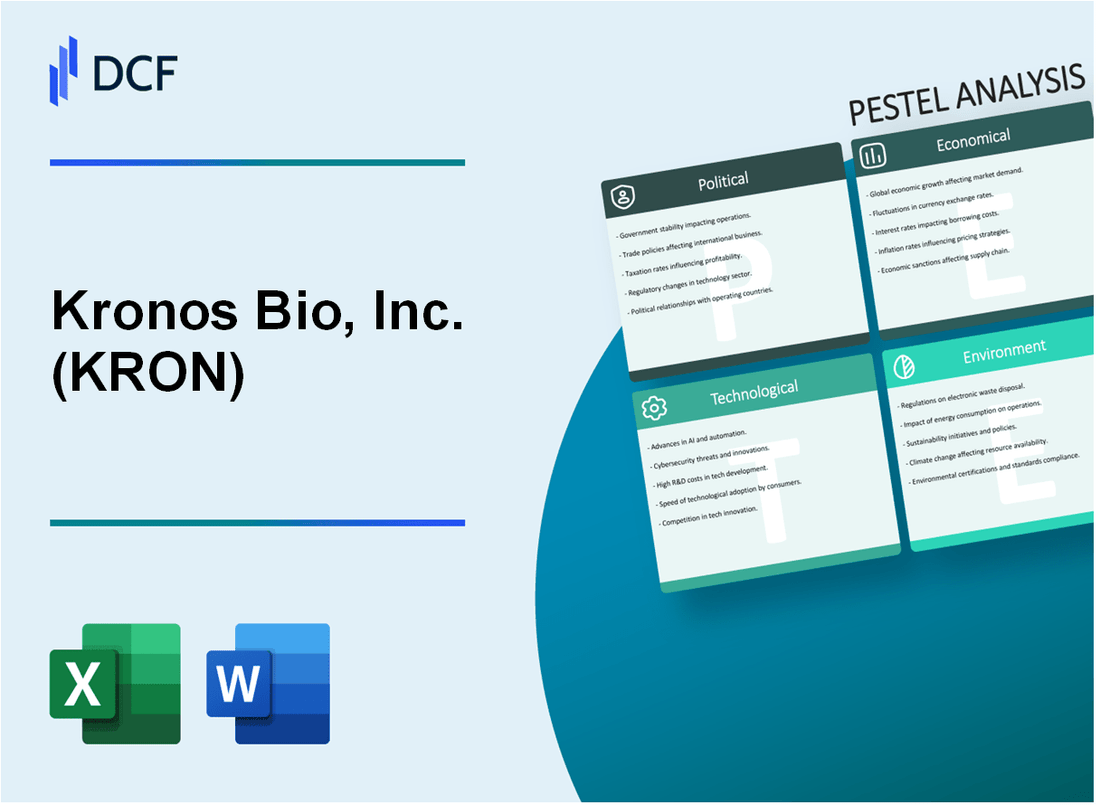
Fully Editable: Tailor To Your Needs In Excel Or Sheets
Professional Design: Trusted, Industry-Standard Templates
Investor-Approved Valuation Models
MAC/PC Compatible, Fully Unlocked
No Expertise Is Needed; Easy To Follow
Kronos Bio, Inc. (KRON) Bundle
You're looking for a clear-eyed view of Kronos Bio, Inc.'s (KRON) operating environment, and honestly, the PESTLE framework is the right tool to map the near-term risks and opportunities. As someone who's been in this game for over two decades, including a decade running analysis at firms like BlackRock, I can tell you the external forces on a clinical-stage biotech are often more decisive than the internal science.
Here's the quick math: your pipeline is your value, but politics and economics dictate the cost of capital and the price you can charge. We need to look at the six key blocks to understand the full picture.
The biggest headline for this analysis is that the former Kronos Bio, Inc. was acquired by Concentra Biosciences in June 2025. This PESTLE, therefore, maps the environment that led to the sale and now defines the path for its assets under new ownership.
Political Factors: Regulatory Headwinds and Stability
The US political landscape creates a critical two-sided coin for oncology biotechs. On one side, the FDA's priority review pathway for breakthrough cancer therapies remains a stable, fast-track process that can accelerate a drug's time-to-market. This is a huge opportunity for the KB-0742 program. On the other side, the Inflation Reduction Act (IRA) drug price negotiation risk looms large for any future oncology revenue, especially as the government continues its scrutiny on high drug launch prices. Plus, geopolitical tensions defintely complicate global supply chains for specialized clinical trial materials, which can delay key milestones.
- FDA priority review remains a clear path.
- IRA negotiation risk caps future drug revenue.
Economic Factors: The Cost of Capital and Exit Strategy
For a clinical-stage company, cash burn is everything. High interest rates in 2025 made raising capital more expensive, forcing a tough decision. Kronos Bio's last reported cash, cash equivalents, and investments were $112.4 million as of December 31, 2024, which was projected to fund operations into the second half of 2026. However, the company's full-year 2024 net loss was $86.1 million. This high burn rate, coupled with challenging biotech financing, made the strong M&A environment an attractive exit. The acquisition by Concentra Biosciences for $0.57 per share plus a Contingent Value Right (CVR) was the ultimate economic outcome in 2025. Honestly, the economic reality forced a sale.
- High interest rates raise capital cost.
- 2024 net loss was $86.1 million.
- Acquisition price was $0.57 per share plus CVR.
Sociological Factors: Patient Demand and Talent Wars
The growing public demand for personalized and targeted cancer treatments, like those targeting transcription factor modulation, validates Kronos Bio's core platform. This societal shift is a tailwind for the science. Increased patient advocacy groups are also influencing clinical trial design, pushing for better access and more empathetic protocols. Still, the intense talent wars for experienced clinical development and regulatory affairs staff remain a major operational risk. You can have the best drug, but you need the right people to run the trials and get it approved. The focus on health equity is also starting to influence drug access and pricing models, which will be a factor for any successful launch.
- Demand for targeted cancer therapies is high.
- Talent acquisition for clinical staff is intense.
Technological Factors: Platform Validation and AI Competition
The core technological opportunity is the advancement in precision oncology, specifically in transcription factor modulation, which directly validates Kronos Bio's proprietary platform. This is the science that Concentra Biosciences bought. Biomarker-driven clinical trials are now the standard for FDA approvals, which favors a targeted approach like theirs. However, the competition is fierce. Large pharma companies with deep pockets are also heavily investing in Artificial Intelligence (AI) to accelerate drug discovery and trial patient selection, which raises the competitive bar significantly. Their proprietary discovery engine needs to keep pace with the industry's rapid adoption of AI to stay relevant.
- Precision oncology validates the core platform.
- AI adoption by competitors accelerates discovery.
Legal Factors: Protecting the Pipeline and CVR Structure
The most critical legal factor for the former Kronos Bio assets is the patent protection on lead assets, such as the SYK inhibitor. Without robust Intellectual Property (IP), the value of the pipeline collapses. The acquisition introduced a new legal complexity: the Contingent Value Right (CVR) structure. This means the former shareholders' final return is tied to future events, creating an ongoing legal and financial interest in the pipeline's success. Separately, strict compliance with global data privacy laws like GDPR (General Data Protection Regulation) is mandatory for running multi-site clinical trials, and ongoing litigation risk related to IP is a constant in the complex biotech landscape.
- Patent protection is paramount for valuation.
- CVR structure ties past shareholders to future success.
Environmental Factors: ESG and Operational Mandates
While not a primary driver of valuation, Environmental, Social, and Governance (ESG) metrics are increasingly important in due diligence, especially for institutional investors. Concentra Biosciences will face increased investor focus on these metrics. Operationally, the need for sustainable lab practices and a reduced carbon footprint in manufacturing is a growing mandate. Plus, proper disposal of hazardous biological and chemical waste from research labs is mandatory, incurring compliance costs. What this estimate hides is the long-term risk of climate change impacting clinical trial sites-extreme weather can defintely delay patient visits and trial completion timelines.
- ESG focus influences investor due diligence.
- Compliance with hazardous waste disposal is mandatory.
Next Step: Concentra Biosciences: Re-evaluate the KB-0742 and KB-9558 clinical trial timelines and budget, mapping them to the new cash runway under the acquisition structure by end of December.
Kronos Bio, Inc. (KRON) - PESTLE Analysis: Political factors
You're operating in oncology, a field where political and regulatory forces act as both a massive accelerant and a serious headwind. The political environment in 2025 is defined by a deep, bipartisan commitment to accelerating cancer treatments, but also by an aggressive push to curb drug costs. For the pipeline assets now under Concentra Biosciences, this dual reality means fast regulatory pathways are available, but the future commercial ceiling is lower and riskier than it was even two years ago.
The biggest political shift isn't a bill, but the new reality of price caps and tariff-driven supply volatility. This is a high-stakes game, and you need to price the political risk into your valuation models defintely.
Inflation Reduction Act (IRA) drug price negotiation risk for future oncology revenue.
The Inflation Reduction Act (IRA) of 2022 fundamentally changed the long-term revenue outlook for small-molecule oncology drugs, a category Kronos Bio's pipeline (like KB-0742) falls into. The IRA's Medicare Drug Price Negotiation Program targets small-molecule drugs for price negotiation as soon as nine years after their initial Food and Drug Administration (FDA) approval. Biologics get a longer, 13-year grace period.
This shortened exclusivity window for small molecules is a clear disincentive for post-approval research, which is crucial in oncology for finding new indications in smaller or rarer patient populations. For a company focused on developing novel small molecules, this policy essentially caps the lifetime profit potential, making the return on a $1 billion+ R&D investment harder to justify. Adding to the pressure, the 2025 Medicare Physician Fee Schedule rule projects an estimated 3.98% overall payment reduction for independent oncology practices, which could accelerate consolidation and change where future treatments are administered. The first negotiated prices will take effect in January 2026.
Continued scrutiny from Congress on high drug launch prices.
Congressional scrutiny on drug pricing remains intense, focusing now on the initial launch price, which the IRA did not directly address. Data from 2024 and 2025 shows that new drug launch prices are still escalating far beyond inflation, keeping the political heat high.
The median annual cost for new cancer drugs launched in 2024 was a staggering $411,855, with all but one exceeding $180,000 per year. This trend continues, as the median net launch price for 154 new drugs increased 51% between 2022 and 2024, even after accounting for inflation and discounts. This is the kind of number that fuels new legislative proposals and public outrage. Any successful drug launch from the acquired Kronos Bio pipeline will immediately become a target for this public and political debate.
Here's the quick math on the price escalation in oncology:
| Metric | Value/Increase (2022-2024 Data) | Source |
| Median Annual Cost of New Cancer Drugs (2024) | $411,855 | IQVIA/PCMA |
| Median Net Launch Price Increase (2022-2024) | 51% | ICER |
| Mean Monthly Launch Price of Oral Anticancer Therapies (2023-2025) | $27,891 (2025 USD) | Pharmacist.com |
FDA's priority review pathway for breakthrough cancer therapies remains stable.
On the flip side, the regulatory environment for innovative oncology drugs is exceptionally favorable. The FDA's expedited pathways-Priority Review, Breakthrough Therapy Designation (BTD), and Fast Track-are stable and heavily utilized, especially in cancer. This is a massive opportunity for the clinical-stage assets.
The data confirms that these pathways are the norm for high-impact cancer therapies:
- 96% of all Breakthrough Therapy applications received a Priority Review designation.
- Oncology accounted for 80% of all accelerated approvals in 2024.
- The Breakthrough Therapy program has a 38.7% success rate for designation grants, and 54% of those designated products have achieved full FDA approval.
This means if a pipeline candidate like KB-0742 shows compelling Phase 2 data, it has a clear, well-trodden, and fast path to market. The FDA is defintely prioritizing breakthrough cancer treatments.
Geopolitical tensions could disrupt global supply chains for clinical trial materials.
Geopolitical instability and trade policy are creating tangible risks for the pharmaceutical supply chain, which directly impacts clinical trial execution for companies like Kronos Bio. Tariffs and international conflicts create cost inflation and transit risks for critical materials.
Near-term risks are driven by escalating trade tensions:
- A 55% consolidated tariff on Chinese imports became effective on June 11, 2025, replacing the previous 30% rate, directly increasing the cost of Active Pharmaceutical Ingredients (APIs) and other key components.
- The US announced a 50% tariff on steel and aluminum in June 2025, which will raise costs for stainless-steel bioprocessing equipment and medical devices essential for manufacturing and clinical sites.
- The Israel-Iran conflict in June 2025 has amplified instability, increasing transit risks and insurance premiums for critical reagents, enzymes, and viral vectors that are often sourced from or routed through the Middle East.
These disruptions translate into higher costs for clinical trial materials and Investigational New Drugs (INDs), potentially delaying milestones. The global Cell and Gene Therapy (CGT) manufacturing market, which relies on complex supply chains, is estimated at $15.1 billion in 2025, and demand is pushing Contract Development and Manufacturing Organization (CDMO) prices higher due to these input costs and geopolitical shocks.
Kronos Bio, Inc. (KRON) - PESTLE Analysis: Economic factors
You need to understand how the macro-economic environment is directly impacting Kronos Bio, Inc.'s ability to fund its science and execute its clinical strategy. The reality is that high interest rates and a challenging biotech financing market are making capital incredibly expensive, so the company's disciplined cash burn is the single most important metric right now.
High interest rates make raising capital more expensive; cash burn is critical.
The persistent high interest rate environment in 2025 has sharply increased the cost of capital for clinical-stage biotechs like Kronos Bio, Inc. Unlike in 2021, a new equity raise (secondary offering) now comes with significant shareholder dilution, making it a last resort. This pressure puts the focus squarely on the company's operating cash burn rate.
Here's the quick math on their recent liquidity position and burn rate, which is critical for investors evaluating the company's financial health:
| Metric | Value (As of Q2 2024) | Significance for 2025 |
|---|---|---|
| Cash, Cash Equivalents & Investments | $136.6 million | Foundation for funding operations into 2026. |
| Net Loss (Q2 2024) | $(16.2) million | Represents the cash-intensive nature of R&D. |
| Estimated Quarterly Cash Burn (Post-Restructuring) | Less than $6 million | A drastic reduction following the 83% workforce cut, extending the runway. |
| Projected Cash Runway | Into the second half of 2026 | Provides a 12-18 month window past the key 2025 data catalysts. |
The reduction in quarterly burn to under $6 million is a defintely necessary move, extending their lifeline into the second half of 2026. This runway buys them time to hit key clinical milestones without immediate, punitive financing.
Biotech financing remains challenging; KRON's cash runway is key to survival.
The broader biotech financing environment remains highly selective in 2025, favoring companies with late-stage assets (Phase 3) or clear commercial revenue. For a clinical-stage company like Kronos Bio, Inc., the path to new capital is entirely dependent on positive clinical data from its core assets, KB-0742 and KB-9558. The second half of 2026 cash runway is their most valuable asset, as it allows them to operate through major catalysts without a gun to their head.
This runway is particularly important because the key 2025 data readouts are binary events:
- KB-0742 topline data (1H 2025) in platinum-resistant HGSOC.
- KB-9558 first-in-human dosing (1H 2025) in multiple myeloma.
If those catalysts are positive, the financing tap opens; if they are not, the strategic review process, which includes asset monetization or a full sale, becomes the immediate priority.
Strong M&A environment means promising Phase 2/3 data could attract a premium acquisition offer.
Despite the challenging public market for small biotechs, the M&A environment is robust, driven by Big Pharma's urgent need to replenish pipelines ahead of major patent expirations. Large pharmaceutical companies collectively have an estimated deal capacity of over $1.5 trillion in 2025, according to industry analysts. This is a massive pool of dry powder looking for de-risked assets.
For Kronos Bio, Inc., this means that a strong efficacy signal from the KB-0742 Phase 1/2 trial, particularly the updated data expected in the first half of 2025, could trigger an acquisition. An asset with promising Phase 2 data is exactly what Big Pharma needs to offset the revenue loss from patent cliffs like Merck's Keytruda, which starts losing protection in 2028. A clean, effective asset is worth a premium in this environment.
Healthcare spending growth projected at 7.1% annually in the US.
The underlying market for Kronos Bio, Inc.'s potential oncology treatments remains strong. National health spending in the US is projected to increase by a significant 7.1% in 2025, a substantial acceleration that is expected to outpace growth in the U.S. gross domestic product. This trend is a major tailwind for biopharma, as it indicates a growing capacity and willingness within the US healthcare system to absorb new, high-cost, innovative therapies, especially in oncology.
This strong spending growth, with total national health expenditures projected to reach $5.6 trillion in 2025, confirms that market access and pricing for a successful cancer drug will be favorable. The economic incentive for a large pharmaceutical company to acquire a successful oncology asset is therefore very high, as the end-market demand is robust and expanding. The question isn't whether the market can support a new cancer drug; it's whether Kronos Bio, Inc. can deliver the data.
Kronos Bio, Inc. (KRON) - PESTLE Analysis: Social factors
Growing public demand for personalized and targeted cancer treatments
The market is sending a clear signal: patients and providers are moving decisively toward personalized medicine, especially in oncology. Kronos Bio's focus on small molecule therapeutics that target deregulated transcription-a mechanism for precision oncology-was strategically sound, aligning with this massive trend. The global personalized medicine market is estimated at a colossal $654.46 billion in 2025, and the oncology segment alone accounted for the largest market share of 41.96% in 2024. This isn't a niche; it's the core of future cancer care.
For a company like Kronos Bio, even post-acquisition, the value of its remaining preclinical assets, such as KB-9558 for multiple myeloma, is directly tied to this social demand. The therapeutics segment of personalized medicine is growing fast, with a projected Compound Annual Growth Rate (CAGR) of 8.10% from 2025 to 2034. This strong, sustained demand creates a clear opportunity for the acquirer, Concentra Biosciences, to find a buyer for these targeted assets, maximizing the Contingent Value Right (CVR) for former shareholders.
Increased patient advocacy groups influencing clinical trial design and access
Patient advocacy groups are no longer just fundraisers; they are now active co-creators in the clinical development process, and companies ignore them at their peril. This social shift means trial design must be patient-centric, or enrollment will suffer. Only about 5% of cancer patients participate in clinical trials, a number that drug developers are desperate to raise, so patient feedback on procedures, logistics, and side effects is critical.
The discontinuation of Kronos Bio's last clinical asset, istisociclib (KB-0742), in late 2024 due to safety signals highlights the social risk of drug tolerability. Patient advocates are instrumental in flagging issues that impact quality of life, which can make or break a trial's success and subsequent regulatory approval. The industry is responding by integrating advocates into major forums, like the 2025 ASCO Annual Meeting, to ensure new protocols are feasible and relevant to the patient experience.
Focus on health equity could influence drug access and pricing models
The push for health equity-ensuring everyone can reach their full health potential-is morphing from a moral goal into a business imperative. Health inequities add an estimated $320 billion annually to US healthcare spending, so addressing them is a financial necessity for the entire system. A significant 75% of life sciences executives anticipate an increased focus on health equity in 2025.
This focus directly impacts how Kronos Bio's future assets (KB-9558, KB-7898) will be priced and accessed if they are successfully developed by a new owner. Novel pricing models are emerging to address affordability concerns for high-cost, personalized therapies:
| Pricing Model | Mechanism for Access/Equity |
|---|---|
| Value-Based Contracts | Price is tied to real-world patient outcomes, shifting financial risk. |
| Mortgage Models | Spreads the cost of expensive, one-time therapies over a period of time. |
| Indication-Specific Pricing | Charges different prices for the same drug based on the specific disease (e.g., a less severe cancer indication gets a lower price). |
Any company acquiring Kronos Bio's preclinical assets will defintely face pressure to adopt these models to ensure broad patient access, especially for oncology treatments.
Talent wars for experienced clinical development and regulatory affairs staff are intense
The broader biotech sector is deep in a talent war, but Kronos Bio's situation is unique: the war is over for them. A BIO industry survey shows that 80% of firms struggle to fill critical roles in research and regulatory affairs, and the sector is facing an estimated 35% talent shortage overall. Regulatory specialists are among the hardest-to-fill roles in 2025, which is a major risk for any clinical-stage company.
Here's the quick math on Kronos Bio's specific talent situation: The company implemented a massive workforce reduction of approximately 83% by the end of 2024, leaving only a skeletal crew of about 10 staff. This drastic move, which followed the shelving of their lead clinical asset, istisociclib, was a cost-cutting measure to prepare for the May 2025 acquisition by Concentra Biosciences. The remaining staff are primarily focused on asset disposition and maintaining the corporate shell, not on advancing clinical development. The talent war is now a risk for any firm that acquires the remaining preclinical assets, KB-9558 and KB-7898, as they will need to immediately hire a full team of experienced clinical development and regulatory staff to move those programs forward.
Kronos Bio, Inc. (KRON) - PESTLE Analysis: Technological factors
Advancements in precision oncology, especially transcription factor modulation, are validating KRON's platform.
The core science Kronos Bio pursued-targeting dysregulated transcription factors (TRNs)-is now a validated, high-potential area in precision oncology. Transcription factors, which control gene expression, were historically considered undruggable targets, but technological progress has changed that. This validation is why the company's clinical-stage assets, like the CDK9 inhibitor istisociclib and the SYK inhibitors entospletinib and lanraplenib, still hold value even after Kronos Bio ceased independent operations. The entire business was built on a proprietary discovery engine designed to decode these complex TRNs and identify druggable cofactors. This is a tough problem, but the technological path is defintely clearer now.
The acquisition of these assets by Ignota Labs in October 2025, following the May 2025 buyout by Concentra Biosciences for $59.7 million, shows that the underlying science remains attractive to specialized firms. For example, competitor Talus Bioscience presented new preclinical data at the 2025 American Association for Cancer Research (AACR) Annual Meeting, validating their own regulome sequencing platform for transcription factor targets. This external activity confirms the technological trend that Kronos Bio was ahead of the curve on.
Increased use of Artificial Intelligence (AI) to accelerate drug discovery and trial patient selection.
AI is now a non-negotiable tool in drug development, especially for complex targets like transcription factors. Kronos Bio understood this, having a multi-year collaboration with Tempus, a leader in AI and precision medicine, to access real-world genomic and transcriptomic data. This partnership was aimed at using computational power to refine the understanding of TRNs and generate biomarker hypotheses.
The most telling technological factor, however, is the fate of Kronos Bio's pipeline. Ignota Labs, an AI drug turnaround company, acquired the clinical assets (for less than $300,000 in upfront fees and milestones) specifically to apply its SAFEPATH AI platform. This platform uses AI-powered cheminformatics and bioinformatics to identify the root causes of drug toxicity and safety issues that derailed Kronos Bio's original development. This is a clear, concrete example of how AI is being used in 2025: not just for initial discovery, but for salvaging promising, but failing, late-stage assets.
- AI shifts from discovery tool to drug rescue mechanism.
- Ignota Labs' SAFEPATH platform targets toxicity root causes.
Biomarker-driven clinical trials are becoming the standard for FDA approvals.
The regulatory and clinical landscape now demands trials driven by specific biomarkers, which are measurable indicators of a biological state. Kronos Bio's lead candidate, KB-0742, was being studied in a Phase 1/2 trial for MYC-amplified solid tumors and other transcriptionally addicted solid tumors, which is inherently a biomarker-driven approach. The collaboration with Tempus was also explicitly exploring a path to developing a companion diagnostic, which is the gold standard for a biomarker-driven therapy.
This focus is a necessary technological adaptation. The old model of 'all-comer' trials is inefficient and costly. The company's former pipeline assets, such as entospletinib for NPM1-mutated acute myeloid leukemia (AML), were targeting genetically defined subsets of cancer, proving they were aligned with the current standard of precision medicine. The challenge, which ultimately led to the company's sale, was generating sufficient positive efficacy data in these highly targeted patient populations.
Competition from large pharma with deep pockets in the targeted oncology space is intense.
The technological sophistication required to compete in precision oncology demands massive capital, which is where Kronos Bio, as a smaller biotech, faced an insurmountable hurdle. Compare its final acquisition price of $59.7 million to the R&D budgets of its large competitors.
For instance, Pfizer's projected full-year 2025 Adjusted R&D expenses are in the range of $10.7 billion to $11.7 billion. Novartis is also making a significant commitment, planning a $23 billion investment over five years in US manufacturing and R&D, including their oncology efforts. This capital disparity means that large pharma can weather multiple clinical failures, invest in massive AI infrastructure, and acquire promising technologies at will, while a small biotech like Kronos Bio is forced to cease operations after setbacks. The technological race is really a financial one.
| Entity | 2025 Financial Metric | Technological Implication |
|---|---|---|
| Kronos Bio, Inc. (KRON) | Acquired for $59.7 million (May 2025) | Inability to fund long-term R&D against deep-pocketed rivals. |
| Pfizer | Projected 2025 Adjusted R&D Expenses: $10.7B to $11.7B | Capacity for sustained, high-risk, high-reward R&D in oncology. |
| Novartis | Planned 5-year US R&D/Manufacturing Investment: $23B | Aggressive, multi-platform expansion in precision medicine and radioligand therapy. |
| Ignota Labs | Acquired KRON's clinical assets for <$300,000 upfront | AI-driven model for salvaging distressed, yet scientifically sound, assets. |
Kronos Bio, Inc. (KRON) - PESTLE Analysis: Legal factors
Patent protection on lead assets, like the SYK inhibitor, is paramount to future valuation.
The legal value of Kronos Bio's intellectual property (IP) is now primarily tied to the terms of the Contingent Value Rights (CVRs) issued to former shareholders following the acquisition by Concentra Biosciences, LLC, which closed on June 20, 2025. The company's total patent portfolio stands at 196 patents globally, with 133 patents active as of late 2025, providing a broad defensive moat for their small molecule platform.
However, the value of the lead clinical assets, including the SYK inhibitors (entospletinib and lanraplenib) and the CDK9 inhibitor KB-0742, is now speculative. The CVR structure stipulates that former shareholders will receive a portion of future proceeds from these disposed or discontinued programs, making the underlying patent life and enforceability a key legal determinant of the CVR's ultimate worth.
Here's the quick math on the CVR split for the new owner, Concentra Biosciences, and the former Kronos Bio shareholders:
| Asset/Proceeds Type | Former Kronos Bio Shareholders' Share (via CVR) | New Owner (Concentra Biosciences) Share |
|---|---|---|
| KB-9558 and KB-7898 (Preclinical Assets) Disposition | 50% of Net Proceeds (within 2 years of closing) | 50% |
| KB-0742, Lanraplenib, and Entospletinib Disposition | 100% of Net Proceeds (prior to closing) | 0% |
| Cost Savings Realized (Year 1-2 Post-Merger) | 80% of Cost Savings | 20% |
The core legal risk here is that the CVR's value is non-tradeable and relies entirely on Concentra Biosciences' ability to successfully monetize IP that Kronos Bio itself had already deprioritized or discontinued. That's a high-risk, high-reward legal instrument.
Strict compliance with global data privacy laws (e.g., GDPR) for multi-site clinical trials.
Even with the discontinuation of the multi-site KB-0742 trial in late 2024, the legal and operational necessity for strict global data privacy compliance remains a critical factor for the new entity. Any future clinical trials for the preclinical assets, KB-9558 and KB-7898, will almost defintely be multi-regional to ensure adequate patient enrollment and diverse data sets.
The legal framework for this compliance is complex and non-negotiable for a biotech operating in the US and internationally. The key regulations include:
- General Data Protection Regulation (GDPR): Applies to all clinical trial data collected from sites within the European Union (EU), mandating strict consent, data minimization, and data transfer protocols.
- Health Insurance Portability and Accountability Act (HIPAA): The foundational US law governing the protection of patient health information, which must be prioritized even when research is conducted outside the US.
- FDA Guidance on Multi-regional Clinical Trials (MRCTs): Recent draft guidance from October 2025 emphasizes the need for foreign sites to be ready for FDA inspection and full compliance with both local laws and US Good Clinical Practice (GCP) standards.
The legal team must ensure that the data collected from the 100+ patients who participated in the discontinued KB-0742 trial (NCT04718675) is handled in accordance with the consent forms and the privacy laws of all participating jurisdictions, or Concentra Biosciences faces significant regulatory fines and reputational damage.
Ongoing litigation risk related to intellectual property (IP) in the complex biotech landscape.
The most immediate litigation risk for Kronos Bio in the first half of 2025 was the shareholder class action lawsuit, Bowen v. Kronos Bio, Inc. et al., filed in May 2025. This suit challenged the fairness of the Concentra Biosciences merger, alleging that the cash offer of $0.57 per share plus CVR undervalued the company and unfairly benefited executives.
However, this specific risk was resolved when the merger closed on June 20, 2025, and the shareholder lawsuit was dropped on June 26, 2025. The ongoing litigation risk has now shifted from a corporate governance challenge to the inherent IP risks of the oncology space.
- IP Enforcement: The new entity must be prepared to defend the 133 active patents in the portfolio against infringement claims, a common and costly occurrence in biotech.
- Freedom-to-Operate (FTO): The FTO analysis for the new preclinical assets, KB-9558 and KB-7898, must be robust to avoid future patent infringement lawsuits, which can cost millions of dollars and halt development.
- CVR Disputes: The CVR structure is a legal risk in itself, as disputes over the calculation of 'Net Proceeds' from the disposition of the older assets (KB-0742, lanraplenib, entospletinib) or the 'Cost Savings' realized are common sources of post-merger litigation.
FDA's requirements for Real-World Evidence (RWE) are becoming more prominent in submissions.
The FDA's regulatory environment, particularly within the Oncology Center of Excellence (OCE), is increasingly focused on the use of Real-World Evidence (RWE) to support drug submissions. This isn't just a regulatory preference; it's a strategic necessity for Concentra Biosciences as it advances Kronos Bio's pipeline.
The OCE RWE Program is a key strategic priority for the FDA in 2025, aiming to modernize evidence development and advance the appropriate, fit-for-purpose application of RWE for regulatory purposes. This means that for the next-generation preclinical assets, KB-9558 (targeting multiple myeloma) and KB-7898, Concentra Biosciences must design their development programs to leverage RWE.
Actionable legal and regulatory steps for the new company include:
- Early Engagement: Utilizing the FDA's 'Advancing RWE Program' to discuss RWE proposals with the agency before protocol development.
- Data Quality: Ensuring the real-world data (RWD) sources-like electronic health records or patient registries-meet the FDA's standards for quality, characterization, and assessment, which is a key focus of the OCE's QCARD Initiative.
- Combination Therapy Guidance: The FDA's July 2025 draft guidance on developing cancer drugs in combination is highly relevant, as new assets may be developed in combination with existing therapies, requiring clear legal and regulatory strategies to demonstrate each drug's contribution.
Ignoring the RWE trend will result in longer, more expensive clinical trials, so the legal and regulatory strategy must be aligned with the FDA's push for data modernization.
Kronos Bio, Inc. (KRON) - PESTLE Analysis: Environmental factors
Need for sustainable lab practices and reduced carbon footprint in manufacturing.
For a clinical-stage oncology company like Kronos Bio, Inc., the environmental pressure isn't about large-scale manufacturing emissions yet, but it's defintely about setting the foundation now. The biotech industry as a whole is moving fast on this; nearly 40% of biotech firms have committed to achieving carbon neutrality by 2030. That's the bar you'll be measured against by institutional investors down the road.
Your current focus should be on R&D lab efficiency. Sustainability initiatives across the sector have already led to a reported 25% decrease in waste generation in labs and manufacturing facilities. You need to adopt energy-efficient practices-like switching to energy-efficient LED lighting systems, which can cut lab energy consumption by about 20%-and optimize your single-use technology (SUT) workflows to reduce plastic waste.
Increased investor focus on ESG (Environmental, Social, and Governance) metrics in due diligence.
The days of investors only caring about pipeline data and cash runway are over. ESG is now a core component of due diligence. Since Kronos Bio, Inc. is a small-cap, pre-commercial company with a market capitalization of about $53.73 million, you are currently below the anecdotal threshold where investors penalize a company for not having a full ESG report (which is typically for companies with >$1 billion in revenue and >1,000 employees).
But still, every biotech is now being scored. Investors are demanding financially integrated and scenario-based disclosures, wanting to know how environmental risks affect your long-term business resilience. Your net loss for the full year 2024 was $86.1 million, so every dollar saved through resource efficiency is a dollar that extends your cash runway of $112.4 million (as of December 31, 2024). That's where the E in ESG becomes financially material right now.
Here's the quick math: Small energy savings in the lab directly cut your General and Administrative (G&A) or Research and Development (R&D) expenses, which were $24.6 million and $48.7 million respectively in 2024. Every cost cut is a win.
Proper disposal of hazardous biological and chemical waste from research labs is mandatory.
This isn't a suggestion; it's a non-negotiable regulatory mandate driven by the Environmental Protection Agency (EPA) and state-level rules. Improper segregation or disposal of hazardous waste can lead to massive fines and immediate operational shutdowns, which a clinical-stage company simply cannot afford. Proper segregation is crucial for compliance and cost efficiency in 2025.
The industry standard for lab waste segregation is strict and uses a color-coded system to ensure the correct treatment (e.g., incineration, steam sterilization, or specialized chemical treatment) is applied to each stream.
| Waste Type | Container Color | Typical Contents in a Biotech Lab | Mandatory Treatment/Disposal |
|---|---|---|---|
| Biohazardous Waste | Red | Used gloves, gauze, IV tubing, syringes without needles (contaminated with blood/OPIM). | Must be placed in leak-proof, puncture-resistant containers; requires steam sterilization or incineration. |
| Hazardous Chemical Waste | Black | Chemicals, solvents, cytotoxic drugs, bulk chemotherapy agents. | Requires proper labeling and disposal through licensed, specialized carriers. |
| Sharps Waste | White (Puncture-Proof) | Needles, scalpel blades, broken glassware. | Must be in puncture-proof containers; requires treatment like incineration. |
| Infectious/Pharmaceutical Waste | Yellow | Swabs with body fluids, expired medicines, trace chemotherapy. | Often requires incineration or specialized treatment. |
Climate change impacts on clinical trial sites (e.g., extreme weather delaying patient visits).
Climate change is a direct operational risk to your clinical trials for KB-0742 and lanraplenib. Your cancer patients are often vulnerable and highly dependent on strict dosing schedules and regular site visits. Extreme weather events, which are increasing in frequency, directly disrupt patient access to trial sites.
Data from 2024-2025 confirms this risk: missed primary care appointments-a proxy for clinical trial visits-increased by 0.72% for every 1°F drop below 39°F (extreme cold) and by 0.64% for every 1°F rise above 89°F (extreme heat). Patients with chronic conditions, like those in your oncology trials, show an even stronger association with missed appointments during these temperature extremes.
Also, major climate-driven disasters (>$1 billion in damages) cause infrastructure destruction that compounds the problem. One week after these events, emergency department use remained elevated by 1.22%, highlighting long-lasting transportation and healthcare access challenges that directly impact your ability to retain patients and collect data.
- Mitigate climate risk with decentralized trial components.
- Use telemedicine to reduce missed appointments; it's linked to a 13% lower odds of no-shows.
- Factor climate-driven logistical delays into your trial timelines.
Next Step: Clinical Operations: Conduct a climate-vulnerability assessment for all active and planned clinical trial sites by the end of Q1 2026.
Disclaimer
All information, articles, and product details provided on this website are for general informational and educational purposes only. We do not claim any ownership over, nor do we intend to infringe upon, any trademarks, copyrights, logos, brand names, or other intellectual property mentioned or depicted on this site. Such intellectual property remains the property of its respective owners, and any references here are made solely for identification or informational purposes, without implying any affiliation, endorsement, or partnership.
We make no representations or warranties, express or implied, regarding the accuracy, completeness, or suitability of any content or products presented. Nothing on this website should be construed as legal, tax, investment, financial, medical, or other professional advice. In addition, no part of this site—including articles or product references—constitutes a solicitation, recommendation, endorsement, advertisement, or offer to buy or sell any securities, franchises, or other financial instruments, particularly in jurisdictions where such activity would be unlawful.
All content is of a general nature and may not address the specific circumstances of any individual or entity. It is not a substitute for professional advice or services. Any actions you take based on the information provided here are strictly at your own risk. You accept full responsibility for any decisions or outcomes arising from your use of this website and agree to release us from any liability in connection with your use of, or reliance upon, the content or products found herein.