

|
Avidity Biosciences, Inc. (RNA): PESTLE Analysis [Nov-2025 Updated] |
Fully Editable: Tailor To Your Needs In Excel Or Sheets
Professional Design: Trusted, Industry-Standard Templates
Investor-Approved Valuation Models
MAC/PC Compatible, Fully Unlocked
No Expertise Is Needed; Easy To Follow
Avidity Biosciences, Inc. (RNA) Bundle
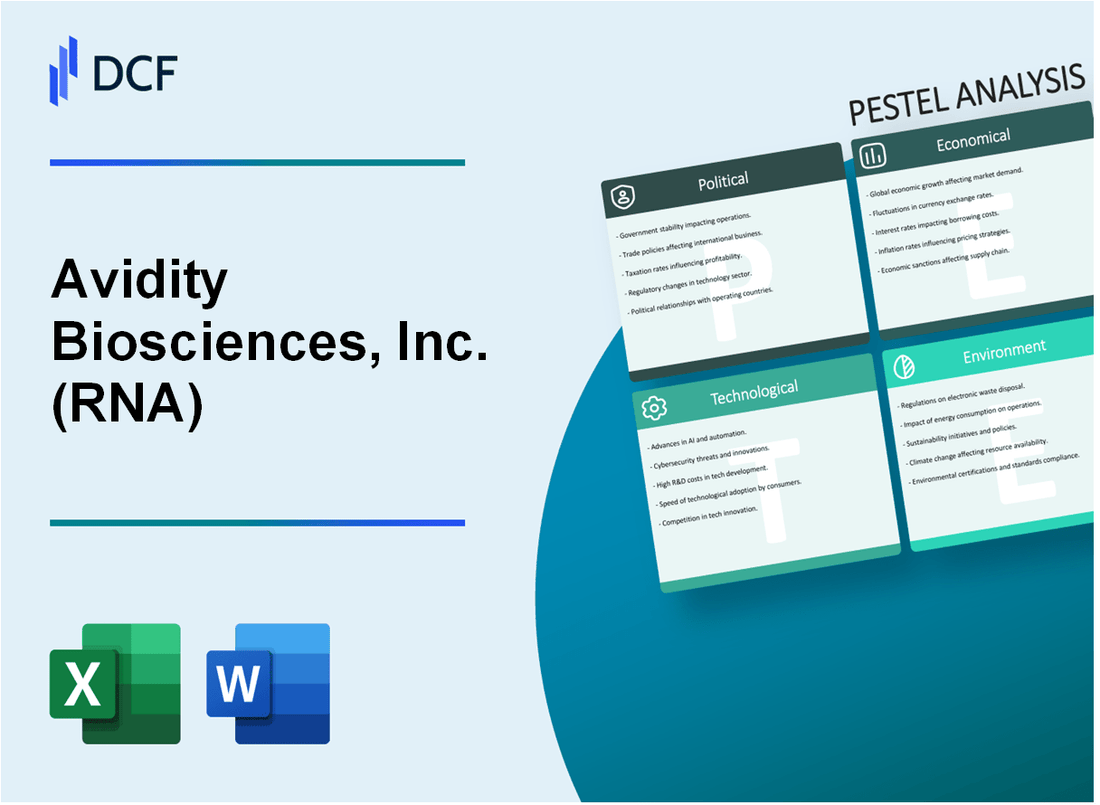
You're looking for a clear-eyed view of Avidity Biosciences, Inc. (RNA)-not just the science, but the whole operating environment. Given the recent $12 billion acquisition agreement with Novartis AG, the PESTLE framework is defintely the right tool to map the near-term landscape. This analysis maps the external forces-from FDA approval pathways to global supply chain mandates-that will determine if the company can convert its late-stage pipeline into commercial success.
Political Factors: Regulatory Review and Pricing Pressure
The planned acquisition by Novartis AG for approximately $12 billion creates an immediate, new layer of regulatory review. This scrutiny, mostly antitrust, is standard but can delay the integration and the strategic shift.
On the positive side, the FDA's alignment on accelerated approval pathways for del-zota and del-brax significantly speeds up potential market access. Still, US drug pricing pressure, driven by the Inflation Reduction Act (IRA) and Most Favored Nation (MFN) policies, could impact future reimbursement models for these rare disease therapies.
Action: Finance and Legal must model reimbursement scenarios under IRA caps now.
Economic Factors: Capital and R&D Spend
The Novartis acquisition provides immediate, significant shareholder value and capital for a global commercial launch. Before the deal, Avidity Biosciences, Inc. maintained a strong cash position of approximately $1.9 billion as of Q3 2025, which provided an operational runway into mid-2028.
This is a late-stage biotech, so the high Research & Development (R&D) expenditure of $392.6 million for the first nine months of 2025 is expected. Plus, the Q3 2025 collaboration revenues included a $10.0 million milestone payment from Eli Lilly and Company, showing external validation of the platform.
Here's the quick math: the capital is there for the launch.
Sociological Factors: Patient Need and Public Trust
The core focus on rare diseases like Myotonic Dystrophy Type 1 (DM1) addresses a high unmet medical need for about 80,000 patients in the U.S. and E.U. Patient advocacy groups hold significant influence on FDA decisions, especially for conditions like Duchenne muscular dystrophy (DMD44).
The existing Managed Access Program (MAP) for del-zota in DMD44 reflects a strong patient-centric approach pre-approval. Honestly, public perception of RNA-based therapies is generally positive following the success of mRNA vaccines, which helps adoption.
Action: Maintain the patient-centric approach as a strategic asset.
Technological Factors: AOC Platform and Competition
The proprietary Antibody Oligonucleotide Conjugate (AOC) platform is the key asset, enabling the first-ever targeted RNA delivery to muscle tissue. This technology is validated by the del-zota one-year data, which showed sustained muscle protection and meaningful functional improvement.
The pipeline expansion into precision cardiology and immunology demonstrates the AOC platform's versatility beyond neuromuscular diseases. Still, management must actively manage the risk of competing gene therapy or small molecule technologies that are also targeting the rare disease space.
One-liner: The AOC platform is a genuine differentiator.
Legal Factors: Exclusivity and IP Defense
FDA granted Breakthrough Therapy designation for del-zota in July 2025, which streamlines development and review. Similarly, del-desiran received Orphan Drug designation in Japan in April 2025, securing market exclusivity benefits there.
The planned Biologics License Application (BLA) submission for del-zota in 2026 for accelerated approval is the next major regulatory hurdle. Intellectual Property (IP) protection for the core AOC platform is defintely critical against competitors, and any legal challenge here would be costly.
Action: Legal must fortify IP defenses globally before the 2026 BLA.
Environmental Factors: Sustainability in Biopharma
The corporate commitment to reducing carbon footprint, including a goal to transition the car fleet to 100% electric by 2030, aligns with investor ESG (Environmental, Social, and Governance) mandates. Oligonucleotide manufacturing is a cell-free process, which inherently has a smaller energy and waste footprint than cell-based biologics.
The European Union is revising pharmaceutical legislation to mandate environmental sustainability in the supply chain, which will affect global operations. The current use of a green energy tariff in operations supports the stated goal of minimizing energy consumption.
Action: Proactively align supply chain with anticipated EU environmental mandates.
Avidity Biosciences, Inc. (RNA) - PESTLE Analysis: Political factors
Novartis acquisition for approximately $12 billion creates a new regulatory review layer.
The rumored acquisition of Avidity Biosciences by Novartis for a staggering $12 billion introduces a significant political and regulatory hurdle. Honestly, any deal of this magnitude-especially in the high-stakes biotech sector-triggers intense scrutiny from both the Federal Trade Commission (FTC) and the Department of Justice (DOJ) in the US. They are looking closely at market concentration, particularly in the rare disease space where Avidity Biosciences' Antibody Oligonucleotide Conjugate (AOC) platform offers a novel mechanism of action.
This isn't just a standard merger review; it's about maintaining competition and ensuring drug prices don't spike post-merger. The review process will likely add 6 to 12 months to the timeline, pushing the final integration well into late 2026. This delay impacts capital planning and product launch strategies, but it's defintely a necessary evil for a deal this large.
Here's a quick look at the immediate regulatory impact:
| Regulatory Body | Primary Focus | Estimated Review Duration |
|---|---|---|
| Federal Trade Commission (FTC) | Anti-trust and market concentration in rare disease therapies. | 6-12 Months |
| Committee on Foreign Investment in the United States (CFIUS) | National security implications (if foreign investment is involved). | 45-90 Days (Initial Review) |
| European Commission (EC) | Competition across the European Economic Area (EEA). | Phase I: 25 Working Days |
FDA aligned on accelerated approval pathways for del-zota and del-brax, speeding up market access.
The political environment within the Food and Drug Administration (FDA) remains generally favorable for breakthrough therapies targeting rare, unmet needs. The FDA has signaled alignment on accelerated approval pathways for Avidity Biosciences' lead candidates, del-zota (for Myotonic Dystrophy Type 1, DM1) and del-brax (for Duchenne Muscular Dystrophy, DMD). This alignment is a huge win, potentially shaving 1.5 to 2 years off the traditional approval timeline.
For del-zota, the goal is to submit a Biologics License Application (BLA) in 2026, with a potential accelerated approval decision by late 2026 or early 2027. This speed is politically motivated; the public and patient advocacy groups exert pressure to get life-changing drugs to market faster. The accelerated pathway typically requires post-marketing confirmatory trials, but it gets the drug to patients sooner. That's the main thing.
Key regulatory milestones and their political drivers:
- Accelerated Approval: Driven by patient advocacy and political pressure to address high-need conditions.
- Priority Review Voucher (PRV) Eligibility: Potential for a $110 million to $130 million asset sale, incentivizing development for neglected tropical/rare pediatric diseases.
- Orphan Drug Designation: Secures 7 years of market exclusivity post-approval, a critical political incentive for rare disease R&D.
US drug pricing pressure (IRA, MFN) could impact future reimbursement models for rare disease therapies.
The political climate around US drug pricing is a major near-term risk. The Inflation Reduction Act (IRA) of 2022 is the biggest change, introducing government negotiation for certain high-cost drugs. While the initial focus is on drugs without competition and those administered for a long time, the political momentum is to expand this. Rare disease therapies, like those from Avidity Biosciences, are currently somewhat protected, but that could change.
Specifically, the IRA's negotiation provisions kick in after 9 years for small-molecule drugs and 13 years for biologics. Del-zota and del-brax, as biologics, would have a longer runway, but the pricing pressure is real. The Most-Favored-Nation (MFN) policy, though currently stalled or revised, represents a political desire to benchmark US drug prices against lower international prices. If enacted, it could reduce Avidity Biosciences' peak sales estimates by up to 20-30% in the US market.
What this estimate hides is the political risk of future legislative amendments that could shorten the protection period for rare disease drugs. The current political debate is centered around a $35 billion to $50 billion annual savings target from drug pricing reforms.
'America First' policies may incentivize onshoring of manufacturing and complicate global supply chains.
The 'America First' political agenda continues to push for the onshoring of critical supply chains, especially in pharmaceuticals and biotech, citing national security concerns. For a company like Avidity Biosciences, which relies on a complex, global network for its specialized oligonucleotide and antibody components, this creates both a risk and an opportunity.
The political incentive is clear: tax credits, grants, and streamlined permitting for building US-based manufacturing facilities. For example, the US government has offered billions in incentives through programs like the Biomedical Advanced Research and Development Authority (BARDA). Avidity Biosciences may need to invest an additional $50 million to $100 million over the next three years to establish domestic manufacturing capacity to qualify for federal contracts or to mitigate future political risks associated with foreign supply chain disruptions.
This complication is twofold:
- Increased Capital Expenditure: Building new US facilities is expensive and time-consuming.
- Supply Chain Redundancy: Maintaining dual US/global supply chains adds operational complexity and cost, potentially increasing Cost of Goods Sold (COGS) by 5-10% in the short term.
The political trend is defintely pushing for domestic production, so planning for US-based manufacturing is a clear action item for the leadership team.
Avidity Biosciences, Inc. (RNA) - PESTLE Analysis: Economic factors
Strong Cash Position and Capital Runway
You need to know that Avidity Biosciences is in an exceptionally strong financial position, which is defintely not typical for a clinical-stage biotech. As of September 30, 2025, the company reported a total of approximately $1.9 billion in cash, cash equivalents, and marketable securities. This massive capital base, bolstered by a September 2025 public offering that generated gross proceeds of $690.0 million, provides an operational runway that is expected to last into mid-2028.
A cash runway this long gives the company immense leverage in clinical development and commercial preparation, insulating it from near-term market volatility. This financial strength was a critical factor in attracting the acquisition offer from Novartis, as it de-risked the late-stage pipeline. The company is funding its ambitious pipeline through equity, not debt, which is a clean balance sheet strategy.
High R&D Expenditure and Investment Focus
The company's financial narrative is one of aggressive investment in its core technology, the Antibody Oligonucleotide Conjugates (AOCs™) platform. This is a high-cost, high-reward model. Here's the quick math: Research and Development (R&D) expenses for the nine months ended September 30, 2025, totaled $392.6 million. This represents a significant increase from the $208.0 million spent in the same period of 2024, reflecting the cost of advancing three late-stage clinical programs-del-zota, del-desiran, and del-brax-simultaneously.
This massive R&D outlay, which drove a net loss of over $174.4 million in Q3 2025 alone, is the cost of moving from a research company to a potential commercial entity. The high expenditure is a necessary economic signal; it shows the company is prioritizing speed to market for its novel RNA therapeutics. Still, the net loss for the first nine months of 2025 was $447.53 million, which highlights the substantial cash burn before product sales begin.
Collaboration Revenue Milestones
While the company is pre-commercial, collaboration revenues provide important validation of its platform and a non-dilutive source of capital. For the third quarter of 2025, total collaboration revenues were $12.5 million.
This revenue was primarily driven by a key clinical development milestone payment:
- A $10.0 million milestone payment received from Eli Lilly and Company during Q3 2025.
This payment, tied to their 2019 research collaboration, demonstrates partner confidence and the successful progression of an AOC-based candidate through a clinical hurdle. This revenue stream, though small compared to R&D, proves the economic value of the underlying technology platform. Collaboration revenues for the first nine months of 2025 totaled $17.9 million.
The Novartis Acquisition: Immediate Shareholder Value and Future Capital
The most significant economic event is the definitive merger agreement announced in October 2025, where Novartis agreed to acquire Avidity Biosciences for a total equity value of approximately $12 billion. This deal provides immediate, significant value to shareholders, representing a premium of 46% to the closing share price on October 24, 2025.
The transaction is structured to maximize value and provide capital for the future:
- Acquisition Value: Approximately $12.0 billion total equity value.
- Per-Share Price: $72.00 per share in cash.
- SpinCo Capital: Avidity's early-stage precision cardiology programs will be separated into a new public company, SpinCo, which will be capitalized with $270 million in cash.
The acquisition, expected to close in the first half of 2026, secures the necessary global commercial launch capital and infrastructure under Novartis, accelerating the reach of Avidity's neuroscience pipeline.
| Financial Metric | Period | Amount (USD) | Significance |
|---|---|---|---|
| Cash, Equivalents, and Marketable Securities | As of September 30, 2025 | Approximately $1.9 billion | Extended cash runway to mid-2028; strong financial security. |
| R&D Expenses | First Nine Months of 2025 | $392.6 million | High investment in late-stage clinical pipeline advancement. |
| Collaboration Revenue | Q3 2025 | $12.5 million | Validation of AOC platform, including a key milestone payment. |
| Eli Lilly Milestone Payment | Q3 2025 | $10.0 million | Specific non-dilutive revenue from a strategic partnership. |
| Novartis Acquisition Equity Value | October 2025 Agreement | Approximately $12.0 billion | Immediate, significant shareholder value and global commercial backing. |
| SpinCo Capitalization | Pre-Closing (Expected 1H 2026) | $270 million | Capital for the separated early-stage precision cardiology programs. |
Avidity Biosciences, Inc. (RNA) - PESTLE Analysis: Social factors
Sociological
Avidity Biosciences operates in a highly sensitive social landscape, one where patient need and advocacy directly impact regulatory and commercial success. You're not just selling a drug; you're offering hope in areas where no treatment exists, and that creates a powerful social license to operate.
Focus on rare diseases like Myotonic Dystrophy Type 1 (DM1) addresses a high unmet medical need
The company's focus on rare, severe diseases immediately positions it to address a critical, high-unmet medical need. Myotonic Dystrophy Type 1 (DM1), for instance, is a progressive, fatal neuromuscular disease with no currently approved disease-modifying therapies. The estimated patient population for DM1 is approximately 80,000 people across the United States and Europe, representing a clear market for a first-in-class treatment like Avidity's delpacibart etedesiran (del-desiran). This small, concentrated patient base also means that every clinical success is magnified within the patient community, creating strong social momentum for regulatory approval.
Here's a quick look at the patient populations driving Avidity's muscle franchise:
| Disease | Investigational Therapy | Estimated Patient Population (U.S. & E.U.) |
| Myotonic Dystrophy Type 1 (DM1) | delpacibart etedesiran (del-desiran) | ~80,000 people |
| Duchenne Muscular Dystrophy (DMD44) | delpacibart zotadirsen (del-zota) | Sub-population of DMD patients amenable to Exon 44 skipping |
Patient advocacy groups hold significant influence on FDA decisions
In the rare disease space, patient advocacy groups (PAOs) are defintely not passive bystanders; they are strategic partners and powerful lobbyists. Groups like Parent Project Muscular Dystrophy (PPMD) for Duchenne muscular dystrophy (DMD) actively collaborate with the U.S. Food and Drug Administration (FDA) and companies, shaping research agendas and influencing the adoption of accelerated approval pathways. This dynamic means that maintaining transparent, empathetic relationships with PAOs is a core business function, not just a public relations exercise. Their input, formalized through initiatives like the FDA's Patient-Focused Drug Development (PFDD) guidance, is crucial for defining clinically meaningful endpoints.
Managed Access Program (MAP) for del-zota in DMD44 reflects a strong patient-centric approach pre-approval
Avidity's decision to launch a U.S. Managed Access Program (MAP) for delpacibart zotadirsen (del-zota) for eligible Duchenne patients amenable to exon 44 skipping (DMD44) is a direct reflection of this patient-centric pressure. This program, announced in November 2025, allows a limited number of patients to receive the investigational therapy outside of a clinical trial before its potential accelerated approval in 2026. This move is a smart strategic action that:
- Provides early access to a therapy where none currently exists.
- Builds goodwill and trust with the patient community.
- Demonstrates a commitment that goes beyond clinical trial data.
Enrollment in the MAP is anticipated to begin by year-end 2025.
Public perception of RNA-based therapies is generally positive following the success of mRNA vaccines
The global success of mRNA vaccines during the COVID-19 pandemic has fundamentally shifted public and regulatory acceptance of RNA-based therapies (like Avidity's Antibody Oligonucleotide Conjugates, or AOCs™). This success has proven the efficacy and scalability of the technology, which is a massive tailwind for the entire sector. The global RNA Therapeutics Market is already valued at approximately USD 8.50 billion in 2025 and is projected to grow significantly. This positive perception accelerates investor confidence and eases the path for new RNA modalities like Avidity's AOCs to enter the market. Still, you have to be fair, post-COVID-19 misinformation and skepticism still exist in some patient groups, so continuous, clear public education remains a necessary task.
Avidity Biosciences, Inc. (RNA) - PESTLE Analysis: Technological factors
Proprietary Antibody Oligonucleotide Conjugate (AOC) platform enables first-ever targeted RNA delivery to muscle tissue.
The core technological advantage for Avidity Biosciences is its proprietary Antibody Oligonucleotide Conjugate (AOC) platform. Honestly, this platform is a game-changer because it solves the biggest problem in RNA therapeutics: getting the drug to the right place. The AOC is a three-part molecule-a monoclonal antibody, a linker, and an oligonucleotide (like a small-interfering RNA or siRNA)-that acts like a guided missile. The antibody component is engineered to specifically target the transferrin receptor 1 (TfR1), which is highly expressed on muscle cells, effectively delivering the RNA payload directly to the affected tissue. This is a massive breakthrough because Avidity was the first company to demonstrate the successful targeted delivery of RNA to muscle with systemic administration in human clinical trials.
This targeted delivery unlocks the potential of RNA to treat diseases previously unreachable with existing therapies, which often only delivered effectively to the liver. Avidity's next-generation innovations in the AOC platform are already showing promise, with preclinical studies demonstrating up to a 30-fold increase in siRNA delivery in skeletal muscle and sustained target inhibition for three months, which should allow for a less frequent dosing schedule.
Del-zota one-year data showed sustained muscle protection and meaningful functional improvement.
The clinical data for delpacibart zotadirsen (del-zota), formerly AOC 1044, in Duchenne Muscular Dystrophy (DMD) amenable to exon 44 skipping (DMD44) provides concrete evidence of the AOC platform's power. The topline data from the Phase 1/2 EXPLORE44 trial, announced in March 2025, showed unprecedented improvements in key biomarkers. The one-year data from the ongoing EXPLORE44-OLE trial, presented in the fourth quarter of 2025, reinforced this, showing a reversal of disease progression and improvement across multiple functional measures compared to natural history data.
Here's the quick math on the DMD44 program, which is on track for a Biologics License Application (BLA) submission by year-end 2025:
| Metric (March 2025 Data) | Result | Significance |
|---|---|---|
| Dystrophin Production | Up to 58% of normal levels | Far exceeds the 5-15% benchmark of existing exon-skipping therapies. |
| Average Dystrophin Production | Approximately 25% of normal levels | Statistically significant increase across treatment groups. |
| Creatine Kinase (CK) Levels | Greater than 80% reduction vs. baseline | Reduction to near-normal levels, indicating substantial muscle damage protection. |
Also, the lead program, del-desiran (AOC 1001) for Myotonic Dystrophy Type 1 (DM1), has shown consistent and durable improvements in myotonia and muscle strength in long-term data, which is a huge de-risking factor for the entire platform.
Pipeline expansion into precision cardiology and immunology demonstrates the AOC platform's versatility beyond neuromuscular diseases.
The AOC platform's versatility is defintely a key technological opportunity, moving Avidity beyond its initial focus on rare skeletal muscle disorders. This is smart because it diversifies the company's risk profile and expands its total addressable market. The platform is now being leveraged to address the root cause of genetic diseases of the heart, a new therapeutic field called precision cardiology.
The pipeline includes two wholly-owned precision cardiology development candidates: AOC 1086 for PLN (phospholamban) cardiomyopathy and AOC 1072 for PRKAG2 Syndrome. These candidates are designed to deliver siRNA directly to the heart muscle to reduce the expression of the disease-causing genes.
- AOC 1086: Targets PLN cardiomyopathy, a progressive cardiac disease.
- AOC 1072: Targets PRKAG2 Syndrome, another rare genetic cardiomyopathy.
- Immunology: Programs are advancing through key partnerships with companies like Eli Lilly and Company and Bristol Myers Squibb, further validating the technology.
Must manage the risk of competing gene therapy or small molecule technologies in the rare disease space.
While the AOC platform is highly differentiated, Avidity operates in a fiercely competitive rare disease market. You have to be a trend-aware realist here: the technological landscape is moving fast, so the risk of competing gene therapy or small molecule technologies is real.
Competitors like Sarepta, Dyne Therapeutics, and Arrowhead are all circling the same waters, often with their own RNA or gene therapy platforms. For instance, Dyne Therapeutics has a similar RNA-based pipeline in rare muscle diseases, including zeleciment basivarsen for DM1, which has also shown improvements in muscle function in its Phase 1/2 studies.
The key risk is that a gene therapy, which aims for a one-time cure, or a highly effective small molecule could emerge and diminish the market for an ongoing treatment like an AOC. Avidity's strong cash runway of approximately $1.4 billion into mid-2027 helps mitigate this near-term financial risk, allowing them to execute on their clinical and commercialization plans before needing to raise more capital.
Avidity Biosciences, Inc. (RNA) - PESTLE Analysis: Legal factors
You're looking at Avidity Biosciences, Inc.'s legal landscape, and honestly, the regulatory momentum in 2025 has been defintely a game-changer. The core legal and regulatory story here is one of accelerated market access and robust intellectual property defense, which is now amplified by the potential acquisition by Novartis for approximately $12 billion. This is a high-stakes environment where every regulatory win translates directly into a massive increase in enterprise value.
The company's strategy hinges on leveraging rare disease designations to fast-track its Antibody Oligonucleotide Conjugate (AOC) platform. The focus is on two key candidates: del-zota for Duchenne muscular dystrophy (DMD) and del-desiran for Myotonic Dystrophy Type 1 (DM1). The recent regulatory milestones are not just procedural; they are clear signals from regulators that the data is compelling.
FDA Granted Breakthrough Therapy Designation for del-zota in July 2025
The U.S. Food and Drug Administration (FDA) granted del-zota (delpacibart zotadirsen) Breakthrough Therapy designation on July 23, 2025, for the treatment of DMD amenable to exon 44 skipping (DMD44). This status is a huge accelerant, not a minor administrative win. It means the FDA recognizes preliminary clinical evidence showing del-zota may offer a substantial improvement over existing therapies for a serious condition.
Breakthrough Therapy designation provides Avidity Biosciences with more intensive guidance from senior FDA staff and eligibility for Priority Review and Rolling Review, which can significantly shorten the time from submission to a final approval decision. For the approximately one in 3,500 to 5,000 boys worldwide affected by DMD, this expedited process is critical. The Phase 1/2 EXPLORE44 trial data was the driver, showing del-zota increased dystrophin production up to 58% of normal levels and decreased creatine kinase by more than 80%.
Del-desiran Received Orphan Drug Designation in Japan in April 2025
Global market exclusivity is a key component of the legal value proposition. On April 8, 2025, the Japan Ministry of Health, Labour and Welfare (MHLW) granted Orphan Drug designation (ODD) to del-desiran (delpacibart etedesiran) for DM1. This designation is given to drugs for diseases affecting fewer than 50,000 patients in Japan and is the first ODD for a DM1 treatment in the country.
This designation secures vital benefits in a major global market, including a period of market exclusivity, tax incentives, and priority review. Del-desiran already holds Breakthrough Therapy, Orphan Drug, and Fast Track designations from the FDA, plus Orphan designation from the European Medicines Agency (EMA), so this Japan ODD completes a strong global regulatory foundation for the drug.
| Drug Candidate | Designation | Region/Authority | Date Granted (2025) |
|---|---|---|---|
| del-zota (DMD44) | Breakthrough Therapy | U.S. FDA | July 23, 2025 |
| del-desiran (DM1) | Orphan Drug Designation (ODD) | Japan MHLW | April 8, 2025 |
| del-zota (DMD44) | Rare Pediatric Disease, Orphan Drug, Fast Track | U.S. FDA | Pre-2025 |
Planned BLA Submission for del-zota in 2026 for Accelerated Approval
The next major regulatory hurdle is the Biologics License Application (BLA) submission for del-zota. Following a positive pre-BLA meeting with the FDA in October 2025, the submission timeline was updated from year-end 2025 to Q1 2026. This slight delay is strategic: it's to ensure the Chemistry, Manufacturing, and Controls (CMC) package includes additional data requested by the FDA.
The company is targeting the U.S. accelerated approval pathway, which is the fastest route to market for this patient population. This filing is the first of three planned BLA submissions over a 12-month period, which will set the commercial foundation for the entire AOC platform. The legal risk here is ensuring the required CMC data is satisfactory to the FDA, which is a common point of friction in the biopharma regulatory process.
Intellectual Property (IP) Protection for the Core AOC Platform is Critical Against Competitors
The value of Avidity Biosciences-evidenced by the potential $12 billion acquisition-is fundamentally tied to its proprietary Antibody Oligonucleotide Conjugate (AOC) platform. The legal defense of this platform against competitors is paramount. The company relies on a robust global patent portfolio to protect the core AOC technology, which is designed to overcome the limitations of traditional oligonucleotide therapies.
As of December 31, 2024, the patent portfolio was substantial, demonstrating a significant legal barrier to entry for rivals. Here's the quick math on their IP strength:
- Issued U.S. Patents: 40
- Granted Foreign Patents: 26
- Pending U.S. Patent Applications: 30
- Pending Foreign Patent Applications: 133
This extensive filing across multiple jurisdictions, including Europe, Japan, and China, is the company's first line of defense, ensuring market exclusivity and protecting the technology that underpins all their clinical programs. The acquisition by Novartis will transfer this entire, critical IP portfolio.
Next Action: Legal Counsel and Regulatory Affairs: Complete the final CMC data package and formally file the del-zota BLA with the FDA in Q1 2026.
Avidity Biosciences, Inc. (RNA) - PESTLE Analysis: Environmental factors
You are moving into a commercial phase with three potential Biologics License Application (BLA) submissions in a 12-month period, which is a massive operational shift. This transition means your environmental footprint, once a small R&D concern, is now a material risk and a key due diligence point, especially with the planned acquisition by Novartis in 2026.
The core challenge is translating your innovative, small-footprint science into a globally compliant, sustainable supply chain. You need to quickly formalize and publish the environmental metrics that investors and regulators, particularly in the European Union, are now demanding in 2025.
Oligonucleotide Manufacturing Footprint: Smaller, but Still Solvent-Intensive
Your Antibody Oligonucleotide Conjugates (AOCs) platform, which relies on oligonucleotide synthesis, gives you an inherent advantage over traditional cell-based biologics. That process is cell-free, meaning you bypass the enormous energy and water consumption associated with large-scale bioreactors and cell culture media.
However, oligonucleotide production still carries a heavy environmental burden. This is not a clean process yet. The primary issue is the high Process Mass Intensity (PMI)-the ratio of total mass input (solvents, reagents, water) to the mass of the final active pharmaceutical ingredient (API). Industry reports from 2025 show that solid-phase oligonucleotide synthesis can generate thousands of kilograms of waste per kilogram of API, mainly from large volumes of hazardous solvents and reagents.
To be a leader, you must focus on greener chemistry and process intensification now. That's the real opportunity.
| Manufacturing Comparison | Traditional Biologics (Cell-Based) | Oligonucleotide Synthesis (Avidity AOCs) |
|---|---|---|
| Process Type | Cell Culture (High Water/Energy Use) | Chemical Synthesis (Cell-Free) |
| Primary Environmental Burden | Large-scale bioreactor energy, water, cell culture media waste. | High Process Mass Intensity (PMI) from hazardous solvents and reagents. |
| Typical PMI (Industry Benchmark) | ~100-1,000 kg/kg API | ~4,300 kg/kg API for a 20-mer oligo (pre-purification) |
| Key Sustainability Action | Optimize bioreactor efficiency, switch to single-use systems. | Implement solution-phase synthesis to reduce solvent volume and waste. |
European Union's Mandate for Environmental Sustainability in the Supply Chain
The European Union is defintely tightening the screws on pharmaceutical environmental compliance, which directly impacts your planned marketing application submissions starting in 2026. The draft review of the General Pharmaceutical Legislation introduces increased requirements for the Environmental Risk Assessment (ERA) that must be part of every marketing authorization application.
This means you must now evaluate the environmental risks from the entire lifecycle of your medicines-from manufacturing waste to patient disposal. Plus, the new EU Packaging Regulation 2025/40 mandates stricter rules on packaging waste reduction and recyclability, requiring a minimum percentage of recycled materials in plastic packaging by 2030. Your supply chain partners must be ready for this now, or you face regulatory delays in a market critical for your three lead programs.
Corporate Commitment to Reducing Carbon Footprint and Fleet Transition
While Avidity Biosciences has not publicly disclosed a specific goal to transition its car fleet to 100% electric by 2030, this is a non-negotiable step for any biotech preparing for commercialization in the current climate. A corporate commitment to reducing Scope 1 and Scope 2 emissions is expected by the market. For context, switching to Battery Electric Vehicles (BEVs) can reduce the life-cycle Greenhouse Gas (GHG) emissions of a fleet by an estimated 73% compared to gasoline cars, based on the projected 2025-2044 average EU electricity mix.
Similarly, the stated goal of minimizing energy consumption through the use of a green energy tariff is a fundamental, low-hanging fruit. For a company focused on R&D and early-stage manufacturing, electricity is a major Scope 2 emissions source. Negotiating a green electricity rate is a quick win that immediately reduces your carbon footprint and stabilizes energy costs, which is a smart financial move. This move is a simple, high-impact action that investors want to see in your next public disclosure.
- Formalize the 2030 fleet electrification goal to quantify Scope 1 reduction.
- Secure a certified green energy tariff to immediately reduce Scope 2 emissions.
- Publish 2025 Scope 1 and Scope 2 CO2e baseline data.
Here's the quick math: If you don't use a green tariff, your electricity emissions in the EU are based on an average of 0.420 kg CO2/kWh; a certified green tariff can drop that to near zero for your Scope 2. That's a huge, immediate reduction.
Disclaimer
All information, articles, and product details provided on this website are for general informational and educational purposes only. We do not claim any ownership over, nor do we intend to infringe upon, any trademarks, copyrights, logos, brand names, or other intellectual property mentioned or depicted on this site. Such intellectual property remains the property of its respective owners, and any references here are made solely for identification or informational purposes, without implying any affiliation, endorsement, or partnership.
We make no representations or warranties, express or implied, regarding the accuracy, completeness, or suitability of any content or products presented. Nothing on this website should be construed as legal, tax, investment, financial, medical, or other professional advice. In addition, no part of this site—including articles or product references—constitutes a solicitation, recommendation, endorsement, advertisement, or offer to buy or sell any securities, franchises, or other financial instruments, particularly in jurisdictions where such activity would be unlawful.
All content is of a general nature and may not address the specific circumstances of any individual or entity. It is not a substitute for professional advice or services. Any actions you take based on the information provided here are strictly at your own risk. You accept full responsibility for any decisions or outcomes arising from your use of this website and agree to release us from any liability in connection with your use of, or reliance upon, the content or products found herein.