
|
The Alkaline Water Company Inc. (WTER): PESTLE Analysis [Nov-2025 Updated] |

Fully Editable: Tailor To Your Needs In Excel Or Sheets
Professional Design: Trusted, Industry-Standard Templates
Investor-Approved Valuation Models
MAC/PC Compatible, Fully Unlocked
No Expertise Is Needed; Easy To Follow
The Alkaline Water Company Inc. (WTER) Bundle
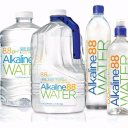
You're looking at The Alkaline Water Company Inc. (WTER) and you see a paradox: a company fighting for its life in a booming market. The US bottled water market is projected to grow at a healthy 6.27% annual rate through 2033, which should be a massive tailwind. Still, WTER's financial reality is stark, with a tiny market capitalization of around $2.66 million as of late 2025 and a trailing twelve-month net loss of about -$22.75 million. That gap between market opportunity and financial execution is the core of their PESTLE analysis, and understanding the political risks, economic pressures, and strong consumer shifts is defintely critical to knowing if this stock, trading around $0.0110 per share, is a turnaround story or a cautionary tale.
The Alkaline Water Company Inc. (WTER) - PESTLE Analysis: Political factors
You're looking at The Alkaline Water Company Inc. (WTER) and trying to map the political landscape, and honestly, the biggest takeaway for 2025 is the sheer cost and complexity of compliance. It's a two-front war: one against tightening water quality rules and another against the chaotic, evolving regulations for their hemp-derived CBD products. This regulatory friction is a direct headwind to margin expansion.
Government regulations on alkaline water production are a constant risk.
The core business, Alkaline88®, operates in an environment where water quality standards are becoming more stringent, not less, despite a general political shift toward deregulation. The U.S. Environmental Protection Agency (EPA) is prioritizing major initiatives, backed by significant federal dollars. For instance, the EPA finalized the first-ever national drinking water standard for PFAS (Per- and Polyfluoroalkyl Substances) in April 2024, setting the enforceable Maximum Contaminant Level (MCL) for PFOA and PFOS at 4.0 parts per trillion.
This means WTER must maintain rigorous testing and purification processes to ensure their source water meets or exceeds these standards, especially since their brand promise is premium hydration. The federal push to upgrade water infrastructure, supported by over $50 billion from the Bipartisan Infrastructure Law, is a long-term positive for overall water quality. Still, for a bottled water company, the immediate political risk is the cost of staying ahead of the curve. You can't afford a single quality issue.
FDA and state-level hemp/CBD regulations burden product compliance and cost.
The regulatory environment for WTER's A88CBD™ line is a mess, and it's a massive compliance burden. The Food and Drug Administration (FDA) continues to decline to regulate CBD as a food supplement as of August 2025, citing 'safety concerns,' which leaves the door open for a patchwork of confusing state laws. This forces WTER to manage compliance on a state-by-state basis, which is defintely expensive.
The political maneuvering in 2025 is focused on eliminating the intoxicating hemp market, which will force product reformulation. A new federal law enacted in late 2025 caps the total THC in consumable hemp products at no more than 0.4 milligrams per package, effectively killing the high-THC beverage space.
Here's the quick math on the state-level compliance complexity for the A88CBD™ line:
| Jurisdiction | Regulation/Bill (2025) | Key Compliance Impact |
|---|---|---|
| Federal (New Law) | Total THC Limit (Late 2025) | Caps total THC in consumables at 0.4 milligrams per package. |
| Texas | Executive Order GA-56 (Sept 2025) | Requires stricter testing (total delta-9 THC + THCA) and raises fees (e.g., Retail Hemp Registration is $155 per location). |
| Florida | Proposed Senate Bill 334 | Caps THC at 2 milligrams per serving and 20 milligrams per container, forcing reformulation for full-spectrum products. |
To be fair, WTER's A88CBD™ products, which use 25mg of CBD per bottle, are generally positioned in the wellness space, but they must adapt to these new, tighter THC limits or risk being banned from key markets. This state-level legislative volatility is a drain on legal and R&D resources.
Global trade policies could impact co-packer costs and supply chain stability.
Trade policy shifts in 2025 are directly increasing the cost of goods sold (COGS) for all beverage companies, including WTER. The US implemented a 25% tariff on all steel and aluminum imports effective March 12, 2025, and a 10% baseline tariff on all imported goods effective April 5, 2025. This directly hits the cost of aluminum cans, metal closures, and other packaging inputs.
WTER's move to acquire new equipment and bring bottling capabilities in-house is a smart, strategic action to mitigate this political-economic risk. They are essentially insulating themselves from the cost volatility of co-packers who are now passing on these tariff-driven increases in aluminum and plastic film costs. This shift is critical for protecting their margins against unpredictable trade wars.
International expansion, like the July 2025 Latin America deal, faces new geopolitical risks.
The Company's global growth strategy took a major step with a strategic international sales and distribution agreement, effective July 1, 2025, to expand the Alkaline88® brand into Latin America and the Caribbean, specifically Puerto Rico, Mexico, and Panama. This is a huge opportunity, but it instantly exposes them to new geopolitical risks.
The Mexican market, a key target, is governed by the USMCA (United States-Mexico-Canada Agreement). While USMCA-compliant goods are exempt from certain tariffs, non-compliant goods from Mexico can face a 25% tariff. This means WTER must meticulously manage its supply chain and origin rules to avoid significant import/export duties. Plus, operating in Latin America introduces currency fluctuation risks and the potential for political instability that can disrupt distribution networks. You need a deep bench of local expertise to navigate that.
The Alkaline Water Company Inc. (WTER) - PESTLE Analysis: Economic factors
US bottled water market is projected to grow at a 6.27% CAGR through 2033.
The core economic opportunity for The Alkaline Water Company Inc. is the robust expansion of the US bottled water market. You should see this as a strong tailwind, honestly, because the demand is there. The overall US bottled water market is projected to grow at a 6.27% Compound Annual Growth Rate (CAGR) through 2033, which is a powerful growth engine for any player in the space.
For perspective, one reputable estimate projects the US market, which was valued around $93.28 billion in 2023, will reach over $168.61 billion by 2032, reflecting a similar CAGR of 6.55%. This growth is fueled by consumers consistently choosing healthier, zero-calorie options over sugary drinks, plus the rising popularity of functional water segments like alkaline water.
Persistent lack of profitability with a TTM net income loss of about -$22.75 million.
Despite the strong industry growth, the company faces a critical headwind: persistent unprofitability. For the trailing twelve months (TTM) ending in late 2025, The Alkaline Water Company Inc. reported a significant net income loss of approximately -$22.75 million. This is the single biggest risk on the economic side, as it burns through capital and keeps the company reliant on external funding.
Here's the quick math on the current financial position:
- TTM Revenue: $62.39 million
- TTM Net Loss: -$22.75 million
- TTM Gross Margin: 20.03%
A 20.03% gross margin is thin, especially for a premium product, and it shows the difficulty in translating top-line revenue growth into actual profit. They need to defintely fix the cost structure.
Successful cancellation of all Convertible Notes in September 2025 strengthened the balance sheet.
A major positive financial move was the successful cancellation of all outstanding Convertible Notes in September 2025. This action immediately strengthened the balance sheet by removing debt and, more importantly, protecting shareholders from massive dilution.
The company cancelled two significant convertible debt instruments in late September 2025, totaling $380,000 in debt removal. This move eliminated the potential issuance of up to 380,000,000 shares of common stock, which is a huge win for the equity structure as the company pursues an uplisting to the OTCQB Venture Market.
High inflation and rising input costs pressure gross margins, especially for co-packed goods.
The macroeconomic environment in 2025 is still challenging due to inflation, which directly impacts the company's cost of goods sold (COGS). The US manufacturing sector, for example, saw the highest input price inflation worldwide in March 2025, which is a direct hit to companies relying on co-packing and materials like PET plastic.
For a company like Alkaline Water Company Inc., which uses co-packers, rising costs for raw materials, energy, and transportation-plus labor-put immense pressure on that already-slim 20.03% gross margin. This table shows the pressure points:
| Input Cost Factor | Economic Impact on WTER | 2025 Context |
|---|---|---|
| PET Resin (Packaging) | Directly increases COGS for bottled product. | US manufacturing input price inflation highest globally in March 2025. |
| Co-Packing Fees | Increases unit cost as co-packers pass on labor and utility inflation. | Federal Reserve data shows core PCE inflation above 3.0% throughout 2024-2025. |
| Transportation/Fuel | Increases distribution expenses, eroding operating margin. | Higher energy costs persist, complicating logistics for national distribution. |
Stock remains highly volatile, trading around $0.0110 per share in November 2025.
The company's stock performance reflects the high-risk, high-potential nature of its current economic situation. As of late November 2025, the stock is trading around $0.0110 per share.
This low price point and the volatility-the 52-week range runs from a low of $0.0100 to a high of $0.480-clearly indicate a highly speculative investment. The market capitalization is extremely small, around $3.91 million, which means any small piece of news, good or bad, can cause a massive swing. The volatility is a major risk for investors and a challenge for the company's capital raising efforts.
The Alkaline Water Company Inc. (WTER) - PESTLE Analysis: Social factors
Strong consumer shift to functional beverages and away from sugary sodas.
You are seeing a massive, irreversible cultural shift away from the legacy beverage category-sugary sodas-toward drinks that actually deliver a perceived health benefit. This is a tailwind The Alkaline Water Company Inc. (WTER) is riding. The US functional beverage market is a powerhouse, estimated to be worth $51.84 billion in 2025, and it's projected to grow at a 6.70% CAGR through 2034. That's a huge market. This trend is so strong that even giants like PepsiCo are aggressively buying into the space, evidenced by their $1.95 billion acquisition of the functional soda brand Poppi in March 2025. The consumer mandate is clear: less sugar, more function. WTER's core product, Alkaline88®, is perfectly positioned as a low-calorie, zero-sugar alternative to the old guard.
The younger demographics, Millennials and Gen Z, are driving this change, with many opting for non-alcoholic and functional alternatives. Honestly, the days of high-fructose corn syrup dominating the shelf are defintely numbered.
Increasing health consciousness drives demand for pH-balanced, electrolyte-enhanced water.
The health-conscious consumer is getting smarter, moving beyond just 'bottled water' to 'enhanced hydration.' They are actively seeking products that support specific wellness goals, and that's where alkaline and electrolyte-enhanced waters come in. The global Functional Water Market is projected to hit $21.0 billion by 2033, growing at a 7.3% CAGR from 2024. This growth is fueled by a heightened awareness of pH balance and the need for electrolytes for performance and recovery. WTER's flagship Alkaline88® brand, with its high pH and clean label, is a direct beneficiary of this social trend.
Here's a quick snapshot of the market segment WTER operates in:
| Market Segment | US Market Value (2025 Estimate) | Growth Driver |
|---|---|---|
| US Functional Beverage Market | $51.84 billion | Health & Wellness, Sugar Reduction |
| Global Functional Water Market (2023) | $10.4 billion | Enhanced Hydration, Immunity Boosting |
| Alkaline Water Market (Projected 2030) | $183.50 million | pH Balance Awareness, Fitness Lifestyle Users |
Convenience culture fuels demand for on-the-go, single-serve bottled water formats.
The American lifestyle is built on convenience, and that translates directly to beverage consumption. Busy schedules and on-the-go consumption are major factors strengthening the demand for portable hydration solutions across all age groups. WTER capitalizes on this by offering a full range of formats, which is crucial for maximizing shelf space and consumer reach. They sell their alkaline water in sizes from the small 500ml bottle for quick consumption up to the 1-gallon size for home use and value-conscious buyers. The ability to service both the single-serve impulse buy and the bulk home-stocking mission is a core social factor opportunity.
- Bottles hold the majority share of the functional water market at 52.3%.
- WTER's distribution network is actively being rebuilt to service the convenience demand.
- New partnerships in mid-2025 aim to get WTER products into an additional 16,000 locations across 32 states.
Brand recognition is strong, but competition from major players like PepsiCo and Nestlé is fierce.
While WTER has established strong brand recognition, its small size makes it vulnerable to the beverage giants. The Alkaline88® brand is a known entity, having maintained a 4.2% market share in the enhanced water segment as of Q4 2023. However, the competitive landscape is brutal. WTER's market capitalization, at just $3.96 million as of June 30, 2025, is dwarfed by the multi-billion dollar marketing and distribution power of competitors. The company is in a strategic turnaround, focusing on recapturing market share lost to rivals like Dasani and SmartWater. The recent focus on securing a new national distributor, which will service 16,000 locations via 67 depots, is a clear action to combat this competition by immediately scaling their logistical reach. This fight is less about product quality and more about distribution muscle and shelf-space dominance.
The Alkaline Water Company Inc. (WTER) - PESTLE Analysis: Technological factors
Proprietary electrolysis process achieves the core 8.8 pH product profile.
The core technology for The Alkaline Water Company Inc. is its proprietary electrolysis process, which is the engine behind the flagship Alkaline88 brand. This technology is not a complex, high-cost chemical process; it's a clean-label method that infuses purified water with Himalayan rock salt, electrolytes, and trace minerals to consistently achieve a perfectly balanced 8.8 pH level. The simplicity of this process is a key technological advantage, allowing for decentralized production through co-packing agreements without sacrificing product quality or consistency across different regions. It's a defintely scalable system.
This proprietary method sidesteps the need for artificial additives or chemicals, which aligns perfectly with the growing consumer demand for clean-label, functional beverages. The technology is foundational to the brand's premium positioning in the market, allowing the company to differentiate itself from standard purified waters and other enhanced water products.
Strategic equipment acquisition (Feb 2025 LOI) aims to boost production and vertical integration.
In a significant move for the 2025 fiscal year, The Alkaline Water Company finalized a strategic equipment acquisition to enhance vertical integration (gaining control over the manufacturing process) and improve operational efficiency. The initial Letter of Intent (LOI) was announced on February 13, 2025, and the transaction was finalized on April 22, 2025, with FZA Note Buyers LLC.
This acquisition was strategically structured through the issuance of 34,000,000 shares of Restricted Stock, which allowed the company to secure essential production equipment while preserving its cash position. This shift to owning production lines for the first time in company history is projected to deliver substantial financial benefits. The quick math suggests this is a smart capital allocation decision.
| Technological/Operational Goal | 2025 Financial/Operational Metric |
|---|---|
| Acquisition Finalization Date | April 22, 2025 |
| Acquisition Consideration | Issuance of 34,000,000 Restricted Shares |
| Projected Cost Savings (First Year) | Up to $2 million |
| Implementation Timeline (Post-Closing) | Rapid 30-day integration |
Digital commerce and Direct-to-Consumer (DTC) channels are critical for market reach.
While the vast majority of sales still flow through traditional retail, digital commerce remains a critical, high-growth channel for Alkaline88. The company sells its products through major e-commerce websites and digital marketplaces like Amazon and Walmart.com. This multi-channel approach is necessary to capture the shift in consumer buying habits, especially in the beverage category, where online grocery purchasing continues to grow.
The company has a dedicated focus on optimizing its e-commerce strategy, including on-platform marketing, advertising, and content optimization, which are essential for increasing digital shelf space visibility and driving Direct-to-Consumer (DTC) sales. Expanding digital reach is a low-capital way to test new markets and product SKUs.
Innovation in co-packing and logistics platforms is key to slashing distribution costs.
The Alkaline Water Company's asset-light model relies heavily on its co-packing network and strategic logistics partnerships to manage costs and scale efficiently. The goal is simple: reduce the expensive outbound shipping costs by producing closer to the end consumer.
The most recent and impactful logistical innovation in 2025 was a major partnership with a national distributor, announced in June. This deal is a game-changer for market penetration and cost control in previously underpenetrated regions, particularly the East Coast and Southern states. This partnership leverages existing infrastructure to achieve immediate scale without the capital expenditure of building new warehouses or hiring large sales forces.
- National Distributor Network: Covers 32 states
- Distribution Hubs: Operates through 67 depots
- Retail Reach: Delivers to over 16,000 locations
- Strategic Goal: Slash distribution costs by utilizing partner's logistics platform
The Alkaline Water Company Inc. (WTER) - PESTLE Analysis: Legal factors
Company filed for OTCQB uplisting after completing its FY2025 PCAOB audit.
The Alkaline Water Company Inc. has made a critical move to improve its capital markets standing by progressing toward an uplisting to the OTCQB Venture Market. This process is a major legal and regulatory undertaking, requiring enhanced financial transparency and compliance with stricter reporting standards than the OTC Pink market.
A key milestone was achieved on August 8, 2025, when the Company announced the completion of its audited financial statements for the fiscal year ending March 31, 2025, by a Public Company Accounting Oversight Board (PCAOB) approved firm. This audit completion fulfills a final, major financial requirement for the OTCQB application. The uplisting is anticipated to enhance the Company's visibility, credibility, and liquidity, which can be a significant factor in attracting institutional investors and improving the stock's valuation.
Debt cancellation in September 2025 reduced future dilution risk from convertible notes.
In a strategic legal and financial maneuver aimed at strengthening the balance sheet for the uplisting effort, the Company executed a series of debt cancellations in September 2025. This action directly addresses the legal risk of future share dilution (the reduction in the ownership percentage of existing shareholders when new shares are issued).
The Company announced the cancellation of multiple Convertible Notes, achieving a substantial reduction in potential outstanding shares. This move demonstrates proactive management of the capital structure, which is a positive signal to the OTC Markets Group and potential investors.
| Convertible Note Cancellation Date (2025) | Amount of Debt Canceled | Potential Shares Eliminated (Dilution Risk) |
|---|---|---|
| September 22 | $250,000 | Up to 250,000,000 shares |
| September 23 | $110,000 | Up to 110,000,000 shares |
| September 24 | $130,000 | Up to 130,000,000 shares |
| Total | $490,000 | Up to 490,000,000 shares |
The total elimination of $490,000 in convertible debt and the removal of up to 490 million shares from the potential float is a defintely positive legal and financial development. Fewer shares mean a cleaner equity structure.
Ongoing risk of litigation, including product liability and stockholder class action claims.
Like any company in the consumer packaged goods (CPG) sector, especially one making health-related claims, Alkaline Water Company faces inherent legal risks from product liability and stockholder actions. The Company's own disclosures acknowledge this exposure to litigation regarding product liability, intellectual property, and stockholder class action claims.
The potential cost of this risk is not abstract; in October 2024, a Nevada state court jury awarded $5 billion in punitive damages against a competitor, Real Water, in a product liability lawsuit stemming from health issues linked to its alkaline water product. While this case is not against Alkaline Water Company, it sets a stark precedent for the massive financial and reputational damage possible in the alkaline water segment. This verdict highlights the critical importance of stringent quality control and accurate product labeling to mitigate catastrophic legal exposure.
Compliance with complex CBD/hemp product laws adds legal and operational overhead.
The Company's A88CBD™ product line subjects it to a highly volatile and complex regulatory environment. The legal landscape for hemp-derived cannabinoids saw a seismic shift in late 2025 with new federal legislation.
This new federal law significantly narrows the definition of legal hemp products and imposes strict new limits. Specifically, consumable hemp-derived products must now contain no more than 0.4 milligrams of total THC per package. This is a hard cap per container, replacing the previous, more lenient weight-based standard (0.3% by dry weight) that allowed many intoxicating products to be sold.
The resulting compliance challenge is substantial and adds operational overhead. The Company must:
- Reformulate A88CBD™ products to meet the new 0.4 mg total THC cap.
- Update all product labeling and packaging to comply with new federal and state mandates.
- Manage inventory obsolescence risk for non-compliant products during the one-year transition period.
The cost of legal counsel, testing, and potential reformulation is a necessary operational expense to maintain the A88CBD™ line's legality and distribution footprint in a rapidly changing regulatory climate.
The Alkaline Water Company Inc. (WTER) - PESTLE Analysis: Environmental factors
Consumer preference is rapidly shifting towards sustainable packaging options.
You need to understand that packaging is no longer a passive container; it's a critical brand-value statement. The market data for 2025 is clear: a full 90% of consumers report being more likely to purchase from brands that prioritize sustainable packaging. This isn't a niche trend anymore-it's the baseline expectation, especially for younger demographics like Millennials and Gen Z.
The core focus for consumers is recyclability, with 77% of respondents in a 2025 survey ranking it as 'extremely important' or 'very important.' This preference is driving the entire bottled water packaging market, which is projected to reach approximately $33.50 billion in the U.S. in 2025. If your packaging isn't easily recyclable, you're giving competitors a clear opening to steal market share. It's that simple.
The company offers eco-friendly aluminum packaging options for its Alkaline88 brand.
The Alkaline Water Company has made a smart, strategic move to counter the plastic narrative by offering a fully-recyclable, 750ml white aluminum bottle for its Alkaline88® brand. This positions the product to capitalize on the booming aluminum bottle market, which is estimated to be worth $7.79 billion globally in 2025 and is projected to grow by 3.1% year-over-year. Aluminum has a high recycling rate and offers a premium, durable feel that resonates with consumers.
The company is specifically targeting the hospitality channel-hotels, restaurants, and airports-with this aluminum format, which is a high-margin, on-premise market. While the exact sales volume from this new line for the 2025 fiscal year remains a non-publicized internal metric, the strategic alignment with market demand for sustainable, premium, single-serve options is a strong offensive play against traditional PET plastic bottles.
| Sustainable Packaging Market Metric (2025) | Value/Projection | Implication for Alkaline Water Company |
|---|---|---|
| U.S. Bottled Water Packaging Market Size | ~$33.50 billion | Large, competitive market demanding material innovation. |
| Global Aluminum Bottle Market Size | ~$7.79 billion | Clear, high-growth opportunity for the Alkaline88® aluminum line. |
| Consumers More Likely to Buy with Sustainable Packaging | 90% | High brand-reputational risk for reliance on non-sustainable formats. |
| Recyclability as 'Extremely/Very Important' | 77% | Aluminum's high recyclability is a key competitive advantage over plastic. |
Water sourcing and usage is a major public relations and environmental risk in drought-prone areas.
This is a major, near-term risk that you can't afford to ignore. The Alkaline Water Company is headquartered in Scottsdale, Arizona, and has recently expanded its presence in the Southwestern U.S., including over 200 store locations in the Phoenix and Tucson metropolitan areas as of May 2025. This region is ground zero for water scarcity concerns.
The long-term drought conditions in Arizona are severe: from September 2020 to August 2025, approximately 85% of the state experienced Exceptional (D4) or Extreme (D3) long-term drought. The Colorado River, which supplies 36% of Arizona's water, is facing unprecedented shortages, with Lake Mead's water level projected to continue declining in 2025. Any water bottling company operating in this environment faces intense public scrutiny and a significant public relations risk, even if the water is purified municipal or groundwater rather than surface water. The optics of selling water in a desert during a megadrought are defintely a liability.
Supply chain vulnerability to environmental disruptions impacts co-packer operations.
The reliance on a co-packer network, which has historically been a key part of the company's operating model, introduces a significant vulnerability to climate-related supply chain shocks. Analysts assign a 90% risk score to climate-related disruptions in 2025. The total global economic losses from natural catastrophes rose to $162 billion in the first half of 2025, up from $156 billion the previous year, showing the rising frequency and cost of these events.
The Alkaline Water Company's strategy to mitigate this risk is to move toward vertical integration. The acquisition of new production equipment in April 2025, which allows the company to control its own production lines for the first time, is a direct, actionable step to build supply chain resilience. This move provides greater control over quality and logistics, but the bulk of production still relies on the existing, geographically dispersed co-packer network, which remains susceptible to regional environmental events like floods, wildfires, or localized water restrictions. Water risk in supply chains is a documented global issue, with an estimated $77 billion under threat across reporting companies.
- Climate-related disruptions have a 90% risk score in 2025.
- First-half 2025 global catastrophe losses hit $162 billion.
- New production equipment acquired in April 2025 to boost internal control.
- Co-packer reliance is a clear source of supply-chain interruption risk.
Disclaimer
All information, articles, and product details provided on this website are for general informational and educational purposes only. We do not claim any ownership over, nor do we intend to infringe upon, any trademarks, copyrights, logos, brand names, or other intellectual property mentioned or depicted on this site. Such intellectual property remains the property of its respective owners, and any references here are made solely for identification or informational purposes, without implying any affiliation, endorsement, or partnership.
We make no representations or warranties, express or implied, regarding the accuracy, completeness, or suitability of any content or products presented. Nothing on this website should be construed as legal, tax, investment, financial, medical, or other professional advice. In addition, no part of this site—including articles or product references—constitutes a solicitation, recommendation, endorsement, advertisement, or offer to buy or sell any securities, franchises, or other financial instruments, particularly in jurisdictions where such activity would be unlawful.
All content is of a general nature and may not address the specific circumstances of any individual or entity. It is not a substitute for professional advice or services. Any actions you take based on the information provided here are strictly at your own risk. You accept full responsibility for any decisions or outcomes arising from your use of this website and agree to release us from any liability in connection with your use of, or reliance upon, the content or products found herein.