
The Vita Coco Company, Inc. (COCO) Bundle
How does a beverage company manage to project fiscal year 2025 Net Sales between $580 million and $595 million while maintaining a balance sheet with virtually no debt, all while operating in a volatile global supply chain? The Vita Coco Company, Inc. has cemented its position as a dominant force in the better-for-you beverage market, with Q3 2025 net sales jumping 37% to $182 million, but what does its unique history and operational model look like under the hood? Plus, with the November 2025 news of a potential tariff rate reduction from 23% to an estimated 6% on its core product, you need to know exactly how this will impact their already strong Adjusted EBITDA guidance of $90 million to $95 million.
The Vita Coco Company, Inc. (COCO) History
The Vita Coco Company's Founding Timeline
Year established
The company was officially established in 2004, though the initial idea sparked from a conversation in a New York City bar in 2003.
Original location
Operations began in New York City, where co-founders Michael Kirban and Ira Liran first conceived the idea.
Founding team members
The founding team consisted of two friends: Michael Kirban, who is now the Co-Founder and Executive Chairman of the Board, and Ira Liran, who serves as a Director.
Initial capital/funding
The initial capital to launch the business was a modest $165,000, which was sourced from family and friends. This small seed money was used to bring the first shipment of packaged coconut water from Brazil to the U.S. market.
The Vita Coco Company's Evolution Milestones
The company's growth wasn't just about product; it was about creating a whole new beverage category-functional hydration-in the U.S. Here's the quick math on how they built that category dominance:
| Year | Key Event | Significance |
|---|---|---|
| 2004 | Founded and launched first coconut water product. | Introduced all-natural coconut water to the U.S. market, pioneering the category. |
| 2007 | Expanded distribution nationally across the U.S. | Significantly increased accessibility and brand recognition, establishing a strong domestic presence. |
| 2009 | Began the 'Coconut Water Wars' with Coca-Cola (Zico) and PepsiCo (O.N.E.) entering the market. | Validated the market size, but forced Vita Coco to defend its first-mover advantage and market share. |
| 2011 | Secured investment from Verlinvest. | Provided crucial capital for further expansion, marketing, and cementing its lead over competitors. |
| 2021 | Went public on the NASDAQ under the ticker COCO and became a Public Benefit Corporation. | Raised capital for continued growth and formalized a commitment to social and environmental impact. |
| 2023 | Partnered with Diageo to launch Vita Coco Spiked with Captain Morgan. | Entered the ready-to-drink (RTD) alcoholic beverage market, diversifying the product portfolio and revenue streams. |
| 2025 | Achieved a Trailing 12-Month (TTM) Revenue of $609 million as of September 30. | Demonstrated continued strong financial performance and market leadership, with a market cap of $2.33 billion as of late October. |
The Vita Coco Company's Transformative Moments
A few strategic decisions stand out as truly transformative, moving the company from a niche startup to a category leader. You defintely need to understand these pivots.
The most critical early move was the Early Focus on Natural Hydration. The founders strategically positioned coconut water as a natural, healthier alternative to traditional sports drinks and sugary sodas, tapping into a burgeoning consumer trend.
- Securing Celebrity Endorsements: Early investments in celebrity partners like Madonna, Matthew McConaughey, and Rihanna gave the brand massive visibility and cultural cachet, which was essential for a new-to-market product.
- Winning the Coconut Water Wars: By outlasting competitors like Coca-Cola's Zico, which was sold back to its founder in 2021, Vita Coco solidified its dominant market position. The company currently holds a 51% share of the coconut water market, including its private label business.
- Vertical Integration and Sourcing Strategy: The decision to expand sourcing beyond Brazil to Southeast Asia (like the Philippines and Sri Lanka) and offer long-term exclusive supply agreements in exchange for equipment was a game-changer. This secured a stable, high-quality supply chain and helped them become a Benefit Corporation through initiatives like the Seedlings for Sustainability program.
The 2021 Initial Public Offering (IPO) was also a major inflection point, providing the capital to scale its platform beyond just coconut water into other functional beverages and private label products. Exploring The Vita Coco Company, Inc. (COCO) Investor Profile: Who's Buying and Why?
The Vita Coco Company, Inc. (COCO) Ownership Structure
The Vita Coco Company, Inc. (COCO) is primarily controlled by institutional investors, which hold the vast majority of its shares, while its leadership team maintains a significant insider stake to align management and shareholder interests.
The Vita Coco Company's Current Status
The Vita Coco Company is a Publicly Held company, trading on the NASDAQ Global Select Market under the ticker symbol COCO. The company completed its Initial Public Offering (IPO) in 2021, transitioning from a formerly private equity-backed entity. As of November 2025, the company's market capitalization stands at approximately $2.49 Billion USD. It also operates as a public benefit corporation and a Certified B Corporation, which legally commits it to balancing profit with purpose.
The Vita Coco Company's Ownership Breakdown
A look at the ownership structure reveals a high concentration of shares in the hands of major financial institutions. This is defintely a key factor in the stock's volatility and corporate governance, as these large holders can heavily influence strategic decisions.
Here's the quick math on who owns the outstanding shares as of November 2025:
| Shareholder Type | Ownership, % | Notes |
|---|---|---|
| Institutional Investors | 85.62% | Includes major firms like BlackRock, Inc., The Vanguard Group, Inc., and Fmr Llc, holding the largest block of shares. |
| Insider Ownership | 10.67% | Represents shares held by executives, directors, and 10%+ owners, ensuring management's interests are closely tied to stock performance. |
| General Public / Retail | 3.71% | The remaining float held by individual, non-institutional investors. |
What this estimate hides is the influence of key private investors, such as Verlinvest Beverages Sa, which was the largest single shareholder with 13% of shares outstanding as of May 2025.
The Vita Coco Company's Leadership
The company is steered by a seasoned leadership team, blending the vision of its founders with experienced operational executives. The average tenure of the management team is around 4.8 years. This stability helps execute the company's strategic vision, which you can read more about in our Mission Statement, Vision, & Core Values of The Vita Coco Company, Inc. (COCO).
- Michael Kirban: Co-founder, Executive Chairman of the Board of Directors. He is a primary visionary, still actively involved in the company's direction.
- Martin Roper: Chief Executive Officer (CEO), Director. Appointed in May 2022, his total yearly compensation is approximately $3.58 million, and he directly owns about 1.63% of the company's shares.
- Corey Baker: Chief Financial Officer (CFO). He manages the financial strategy and reporting, including the strong Q3 2025 net sales of $182 million.
- Jonathan Burth: Chief Operating Officer (COO). Oversees the complex global supply chain and operations.
- Jane Prior: Chief Marketing Officer (CMO). Responsible for brand strategy and market penetration.
- Charles van Es: Chief Sales Officer. Drives the company's revenue and distribution channels.
The leadership is focused on long-term growth, even noting that the recent tariff relief on coconut water products is not expected to materially impact 2025 financial results due to existing inventory.
The Vita Coco Company, Inc. (COCO) Mission and Values
The Vita Coco Company's purpose goes beyond selling beverages; it's a commitment to creating better-for-you products while actively improving the communities and environment it touches. This dual focus on profit and social good is why the company became a Delaware public benefit corporation (PBC) in 2021.
Honestly, understanding this mission is key to valuing the stock, especially since their Q3 2025 net sales hit a strong $182 million, proving you can balance purpose and profit.
Given Company's Core Purpose
As a seasoned analyst, I look at the mission and values to gauge long-term risk and opportunity-it's the cultural DNA that drives sustainable growth, not just a marketing line.
Official mission statement
The Vita Coco Company's mission is clear and action-oriented: Mission Statement, Vision, & Core Values of The Vita Coco Company, Inc. (COCO).
- We're building a better world by building better-for-you beverages and building mindful brands that are better for our communities.
This mission directly translates to their product portfolio, like the national rollout of Vita Coco Treats in 2025, which expands their 'better-for-you' offerings. Also, their commitment to communities is tangible through the Seedlings for Sustainability program, which aims to distribute 10 million coconut seeds and trees globally by 2030.
Vision statement
The vision statement maps out their ultimate destination, focusing on market dominance alongside ethical practices. It's a defintely ambitious goal.
- To be the leading global brand in the coconut water industry, promoting health and sustainability.
Here's the quick math on their market position: The company already holds a significant market share in the coconut water category, which is the foundation for this global leadership vision. Their Q2 2025 net sales of $169 million, a 17% increase from the prior year, show they are executing on this growth-focused vision.
Given Company slogan/tagline
The primary slogan is simple, connecting the product to a feeling of vitality and energy.
- Vita Coco: Thirst For Life.
The company also uses the phrase GOOD FOR FEELING GOOD on its Investor Relations site, which neatly summarizes the benefit of their healthy, nutritious, and great-tasting products. That's a clean one-liner for their entire brand family.
The Vita Coco Company, Inc. (COCO) How It Works
The Vita Coco Company operates as a global, asset-light, plant-based functional hydration platform, primarily creating value by sourcing coconuts globally and transforming their water into a premium, shelf-stable beverage distributed across over 40 countries. This model allows them to maintain market leadership in the coconut water category and expand into adjacent health-focused drink segments.
Given Company's Product/Service Portfolio
| Product/Service | Target Market | Key Features |
|---|---|---|
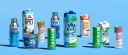
| Vita Coco Coconut Water (Original, Pressed, Juice) | Mass-market health-conscious consumers, athletes, younger/multicultural households | Electrolyte-rich natural hydration; dominant U.S. market share (over 40%); shelf-stable packaging. |
| Vita Coco Treats | Consumers seeking indulgent, plant-based, dairy-free beverages | Coconut milk-based drink; national rollout in 2025; diversifies the portfolio beyond pure water. |
| PWR LIFT | Fitness-focused consumers and athletes seeking recovery drinks | Protein-infused coconut water; targets the performance and recovery occasion. |
| Ever & Ever | Sustainability-focused consumers, corporate and hospitality channels | Purified water in 100% recyclable aluminum bottles; aligns with ESG strategy. |
Given Company's Operational Framework
The company's operational success hinges on its asset-light supply chain model, which minimizes capital expenditure on manufacturing by using co-packers and a diversified sourcing network. This flexibility is defintely a core strength, especially with geopolitical and tariff volatility.
- Global Sourcing Network: The company sources coconuts from a diversified network of 17 factories (approximately 20 co-packers) across seven countries, including Brazil, Indonesia, and the Philippines.
- Asset-Light Model: By partnering with co-packers, they avoid owning and operating most manufacturing facilities, allowing them to scale production quickly and efficiently without heavy fixed costs.
- Tariff Mitigation: To counter the impact of U.S. tariffs, which peaked at a blended rate of approximately 23% on imported goods in Q3 2025, the company has strategically shifted its supply chain and implemented pricing adjustments.
- Distribution: Products reach consumers through a vast, diversified retail presence of over 85,000 locations across grocery, convenience, and online channels.
The primary value creation step is the efficient and cost-effective transformation of raw coconut water into a branded, packaged, and globally distributed product, supported by long-term contracts with 87 farming cooperatives to ensure stable, sustainable supply.
Given Company's Strategic Advantages
The Vita Coco Company's market success is grounded in its powerful brand and its ability to execute a resilient, global supply strategy. For the full year 2025, management is guiding for net sales between $580 million and $595 million, which reflects confidence in these advantages.
- Category Dominance: The flagship Vita Coco brand commands over a 40% market share in the U.S. coconut water category, giving it significant leverage with retailers and distributors.
- Brand Equity and Marketing: Vita Coco is a premium lifestyle brand that over-indexes with younger and multicultural households, reinforced by campaigns like Major League Hydration by Vita Coco™ in 2025.
- Financial Strength: The company maintains a strong balance sheet with no debt and a healthy cash position of $204 million as of September 30, 2025, providing capital for growth and innovation.
- Global Footprint: Market leadership extends beyond the U.S., with an 82% market share in the U.K. and strong growth in markets like Germany, demonstrating replicable international expansion.
- Product Diversification: Strategic innovation into adjacent categories, like the successful national rollout of Vita Coco Treats, reduces reliance on the core coconut water product.
You can learn more about the company's long-term vision and values here: Mission Statement, Vision, & Core Values of The Vita Coco Company, Inc. (COCO).
The Vita Coco Company, Inc. (COCO) How It Makes Money
The Vita Coco Company, Inc. primarily makes money by selling its branded, better-for-you beverages, with its flagship coconut water product acting as the core financial engine and accounting for the vast majority of its net sales. The company operates on an asset-light model, focusing on brand development, marketing, and a robust global distribution network rather than owning manufacturing facilities.
Given Company's Revenue Breakdown
As a seasoned analyst, I look at the most recent quarter to understand the current financial momentum. For the third quarter of 2025, The Vita Coco Company generated $182.31 million in net sales, and the breakdown clearly shows where the value is created. It's a one-product-dominant model, but the new product lines are showing explosive growth.
| Revenue Stream | % of Total (Q3 2025) | Growth Trend (Q3 2025 YoY) |
|---|---|---|
| Vita Coco Coconut Water (Branded) | 84.68% | Increasing (42%) |
| Private Label (Coconut Water/Oil) | 12.34% | Increasing (6%) |
| Other (e.g., Vita Coco Treats, PWR LIFT) | 2.98% | Rapidly Increasing (182%) |
Business Economics
The company's economic model is built on premium pricing, category leadership, and managing a complex, global supply chain. Vita Coco Coconut Water is a premium functional beverage, often priced between $2.49 and $3.99 for a 16.9 oz bottle, which is a clear premium over traditional soft drinks. This price point is necessary to maintain margins against a volatile input cost environment.
Here's the quick math on their cost structure: the biggest near-term risk is tariffs. Management reported a weighted average tariff rate of approximately 23% on applicable shipments, which applies to about 60% of their global cost of goods sold (COGS). This is expected to create an incremental COGS impact of between $14 million and $16 million for the full year 2025.
To offset these rising costs-from tariffs and general inflation-the company executed two U.S. price increases in 2025: one in mid-May for cost inflation and a second in mid-July specifically for tariffs. This resulted in a cumulative on-shelf price increase of about 7% over two years. That's a defintely necessary action to protect their gross margin, which is guided to be approximately 36% for the full fiscal year 2025.
- Maintain market leadership: The Vita Coco brand holds over 50% market share in the U.S. coconut water market.
- Pricing power: Brand strength allows for price increases to mitigate commodity and tariff headwinds.
- Asset-light model: Outsourcing manufacturing keeps capital expenditures low and provides sourcing flexibility.
You can see the strategic focus on brand strength and category expansion in their Mission Statement, Vision, & Core Values of The Vita Coco Company, Inc. (COCO).
Given Company's Financial Performance
The Vita Coco Company's financial performance through the first nine months of 2025 shows robust top-line growth and strong profitability, despite the cost pressures. The company has successfully translated its volume growth into higher net income.
- Net Sales Guidance: Full-year 2025 net sales are projected to be between $580 million and $595 million, a significant increase from the 2024 total of $516 million.
- Year-to-Date (YTD) Net Sales: As of September 30, 2025, YTD net sales reached $482 million, an increase of 24% year-over-year.
- Net Income: YTD net income stands at $66 million, up from $53 million in the prior year period.
- Adjusted EBITDA: The company raised its full-year Adjusted EBITDA guidance to a range of $90 million to $95 million.
- Balance Sheet Health: The balance sheet is exceptionally strong, reporting $204 million in cash and cash equivalents as of September 30, 2025, with absolutely no debt under its revolving credit facility. This provides significant capital allocation flexibility for future growth or share repurchases.
The Vita Coco Company, Inc. (COCO) Market Position & Future Outlook
The Vita Coco Company maintains a dominant, almost unassailable, position in the U.S. coconut water market, leveraging its brand equity and superior distribution to drive significant revenue growth. The future outlook is strong, with full-year 2025 net sales projected to be between $580 million and $595 million, but this growth must be balanced against rising geopolitical and supply chain risks.
Competitive Landscape
The coconut water segment is highly concentrated at the top, but fragmented beneath the market leader. The Vita Coco Company holds a commanding lead, forcing competitors to focus on niche segments like organic, cold-pressed, or functional blends to gain traction.
| Company | Market Share, % (US Coconut Water) | Key Advantage |
|---|---|---|
| The Vita Coco Company | 44.5% | Category-defining brand equity and massive distribution network. |
| ZICO Rising | ~12% (Est.) | Original first-mover brand, strong focus on pure coconut water. |
| Harmless Harvest | ~8% (Est.) | Premium, organic, cold-pressed positioning with strong consumer loyalty. |
Opportunities & Challenges
You need to see the near-term landscape as a trade-off: The company's core market is booming, but its asset-light model is currently exposed to global trade friction. Honestly, the biggest challenge isn't competition; it's the supply chain. Here's the quick math on the risks and opportunities:
| Opportunities | Risks |
|---|---|
| Product Diversification into Functional Beverages | Escalating U.S. Tariffs on Imports |
| Accelerated International Expansion in Europe | Supply Chain Volatility and Ocean Freight Costs |
| Capturing Premium Organic Segment Growth | Customer Concentration Risk |
The product diversification strategy is paying off, with new lines like Vita Coco Treats (a coconutmilk-based drink) and PWR LIFT (a protein-infused beverage) expanding the total addressable market beyond core coconut water. International growth is accelerating, with branded coconut water sales surging 43% internationally in Q2 2025, particularly in the U.K. and Germany.
Still, the tariff situation is a real headwind. The company is grappling with a blended tariff rate of approximately 23% on imported goods as of September 2025, which directly pressures the gross margin, which is expected to be approximately 36% for the full year. Plus, a heavy reliance on a few major customers presents a customer concentration risk. If onboarding takes 14+ days, churn risk rises.
Industry Position
The Vita Coco Company is the undisputed leader in the U.S. coconut water category and a dominant global player, setting the pace for innovation and market expansion. The company's financial health is robust, with zero debt and a strong cash position of $204 million as of September 30, 2025.
- Dominance: The company commands over 40% of the U.S. coconut water market and over 80% in the U.K., giving it significant pricing power and shelf space leverage.
- Financial Scale: Full-year 2025 adjusted EBITDA is projected to be between $86 million and $92 million, demonstrating strong profitability despite cost pressures.
- Market Trend Alignment: The coconut water market itself is booming, expected to grow at a Compound Annual Growth Rate (CAGR) of 17.3% from 2025 to 2030, and the company is perfectly positioned to capture this growth. [cite: 7 in third search]
- Diversification: The move into adjacent plant-based categories, like the successful U.S. rollout of Vita Coco Treats, positions the company as a broader functional hydration platform, reducing reliance on its core product.
For a deeper dive into the company's financial resilience against these macro pressures, you should read Breaking Down The Vita Coco Company, Inc. (COCO) Financial Health: Key Insights for Investors.
The Vita Coco Company, Inc. (COCO) DCF Excel Template
5-Year Financial Model
40+ Charts & Metrics
DCF & Multiple Valuation
Free Email Support
Disclaimer
All information, articles, and product details provided on this website are for general informational and educational purposes only. We do not claim any ownership over, nor do we intend to infringe upon, any trademarks, copyrights, logos, brand names, or other intellectual property mentioned or depicted on this site. Such intellectual property remains the property of its respective owners, and any references here are made solely for identification or informational purposes, without implying any affiliation, endorsement, or partnership.
We make no representations or warranties, express or implied, regarding the accuracy, completeness, or suitability of any content or products presented. Nothing on this website should be construed as legal, tax, investment, financial, medical, or other professional advice. In addition, no part of this site—including articles or product references—constitutes a solicitation, recommendation, endorsement, advertisement, or offer to buy or sell any securities, franchises, or other financial instruments, particularly in jurisdictions where such activity would be unlawful.
All content is of a general nature and may not address the specific circumstances of any individual or entity. It is not a substitute for professional advice or services. Any actions you take based on the information provided here are strictly at your own risk. You accept full responsibility for any decisions or outcomes arising from your use of this website and agree to release us from any liability in connection with your use of, or reliance upon, the content or products found herein.