
|
The Alkaline Water Company Inc. (WTER): 5 FORCES Analysis [Apr-2026 Updated] |
Entièrement Modifiable: Adapté À Vos Besoins Dans Excel Ou Sheets
Conception Professionnelle: Modèles Fiables Et Conformes Aux Normes Du Secteur
Pré-Construits Pour Une Utilisation Rapide Et Efficace
Compatible MAC/PC, entièrement débloqué
Aucune Expertise N'Est Requise; Facile À Suivre
The Alkaline Water Company Inc. (WTER) Bundle
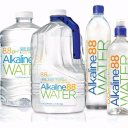
You're digging into The Alkaline Water Company Inc. (WTER) to see if this premium water venture has a durable moat, and frankly, the competitive landscape as of late 2025 is brutal. Honestly, the Five Forces framework shows a company under immense pressure: you're staring down giants in an extremely competitive rivalry, evidenced by the trailing net loss of -$22.75 million against a tiny market capitalization of just $3.91 million in November 2025. While the July 2025 move to acquire a distributor signals a smart play against supplier leverage, the high power of national retailers and the ever-present threat from near-zero-cost tap water mean every basis point matters. Keep reading below; I've broken down exactly where the real fight is for The Alkaline Water Company Inc. in this crowded hydration space.
The Alkaline Water Company Inc. (WTER) - Porter's Five Forces: Bargaining power of suppliers
The Alkaline Water Company Inc.'s reliance on an outsourced production model means co-packers and bottle manufacturers hold a defintely moderate level of leverage. You see this dynamic playing out across the industry, as brands delegate production to third-party partners for cost and labor flexibility. The bottle suppliers, in particular, are significant players; the global bottled water packaging market is valued at USD 117.74 billion in 2025, with plastic dominating at a 77.0% market share. This concentration in the plastic supply chain gives those manufacturers leverage over The Alkaline Water Company Inc.
To counter this, The Alkaline Water Company Inc. made a strategic move in July 2025. The company entered into a non-binding Memorandum of Understanding (MOU) to acquire a regional wholesale distributor and logistics platform located in the central United States. This target business generated $17 million in sales in 2024. This action directly supports vertical integration, aiming to mitigate supply chain risk and reduce dependence on external production and distribution partners, which is a clear pushback against supplier power.
Pressure on margins comes from volatile input costs, especially for packaging. The Alkaline Water Company Inc.'s reported gross margin is 20.03%. This margin is directly threatened by external factors like resin costs. For instance, 2025 tariffs on imported plastic resins and petrochemical feedstocks could translate to cost increases ranging between 12-20% for manufacturers sourcing materials internationally. Energy costs, another key input for production, add to this volatility, squeezing that 20.03% gross margin further.
When looking at the most basic input, raw water source access is generally abundant, which keeps the bargaining power of those specific suppliers low. The complexity arises further down the chain with specialized processing and packaging.
Here are the key financial and market statistics relevant to supplier power:
| Metric | Value | Context/Source Year |
|---|---|---|
| Reported Gross Margin | 20.03% | Latest available financial data |
| Potential Resin Cost Increase (Tariff Impact) | 12-20% | Estimate for manufacturers relying on imported raw materials in 2025 |
| Bottled Water Packaging Market Value | USD 117.74 billion | 2025 forecast value |
| Plastic Share of Packaging Market | 77.0% | Leading material segment in 2025 |
| Acquired Distributor 2024 Sales | $17 million | Target company revenue in 2024 |
| Last 12 Months Revenue | $62.39 million | Latest available financial data |
The reliance on third parties for core manufacturing and packaging means The Alkaline Water Company Inc. must actively manage these relationships. You need to watch the execution of the distributor acquisition closely, as its success directly impacts the company's ability to internalize margin and reduce external pressure.
- Co-packers provide flexibility and cost solutions for smaller businesses.
- Plastic resin costs are subject to geopolitical tariff risks.
- The July 2025 acquisition targets vertical integration.
- Water source power is low due to general abundance.
- The 20.03% gross margin is vulnerable to input inflation.
The Alkaline Water Company Inc. (WTER) - Porter's Five Forces: Bargaining power of customers
You're looking at the power your major buyers-the big retailers-wield over The Alkaline Water Company Inc. Honestly, this power is substantial, largely because of the sheer scale of their operations and the channels they control.
National retailers exert high power due to significant purchase volumes and widespread distribution access across over 75,000 stores. As of historical reporting, The Alkaline Water Company Inc. reached distribution in as many as 80,000 stores nationwide, and its bottled alkaline water product is presently available in over 75,000 stores across all 50 states, D.C., the Caribbean, and in Mexico and Canada. More recently, in June 2025, a strategic distribution agreement was announced with a leading upper Midwest independent distributor serving over 16,000 locations across 32 states, extending reach to the East Coast from 67 depots delivering six days a week. The company sells its products directly to these national retailers, alongside convenience stores, natural food products stores, and large ethnic markets, meaning a few large buyers control access to a massive consumer base.
Customers are price-sensitive, with the product priced at a premium above traditional bottled water. While the prompt suggests a premium of \$1-\$1.50 per gallon, recent analysis of the premium hydration space indicated that alkaline water's premium pricing could range from \$3-\$5 per gallon compared to competitors' \$1-\$2 per gallon. This difference in price point means consumers are definitely evaluating value, and any perceived lack of differentiation could push them toward less expensive options. The company's net income (ttm) was reported as -\$22.75M, highlighting the pressure on margins that pricing power-or lack thereof-exerts.
The company's sales are concentrated in the highly competitive grocery and mass-market channels. This concentration means that when a major retailer like Woodman's Markets (which has 200+ superstores in Wisconsin and Illinois) makes a purchasing decision, it significantly impacts The Alkaline Water Company Inc.'s top line. The company is actively working to expand into specialty grocery, deli, bakery, and foodservice operations, but the core remains in these high-volume, high-leverage channels. For context on the company's scale, its total gross revenues between 2015 and 2023 reached \$276 million.
Brand loyalty is moderate, allowing customers to easily switch to lower-cost or competitor alkaline brands. The Alkaline88® brand, while recognized, held a 4.2% market share in the enhanced water segment as of Q3 2023. The CEO's focus in 2025 has been on rebuilding distribution networks that once included major players like Walmart and CVS, suggesting that regaining shelf space and consumer mindshare from established competitors like Dasani and SmartWater is a key challenge. If the premium price is not justified by perceived health benefits or superior taste, switching costs for the customer are essentially zero.
Here's a quick look at some relevant scale and financial metrics that frame this buyer power:
| Metric | Value/Data Point | Context/Date Reference |
|---|---|---|
| Maximum Historical Store Count | 80,000 stores | Historical distribution reach |
| Current/Recent Store Count | Over 75,000 stores | Present availability |
| New Distributor Reach (June 2025) | Over 16,000 locations | New distribution agreement |
| New Distributor Depots | 67 depots | New distribution infrastructure |
| Alkaline88 Market Share (Enhanced Water) | 4.2% | As of Q3 2023 |
| Reported Premium Price Range (Alkaline Water) | \$3-\$5 per gallon | Comparison point for price sensitivity |
| Market Capitalization (June 30, 2025) | \$3.96M | Current company valuation context |
The power of the buyer is further illustrated by the variety of retail entry points The Alkaline Water Company Inc. must manage:
- Convenience stores
- Natural food products stores
- Large ethnic markets
- National retailers
- Specialty grocery outlets
- Foodservice operations
So, you see, the reliance on large-volume buyers means The Alkaline Water Company Inc. has to constantly negotiate terms, placement fees, and pricing, which directly impacts its ability to achieve profitability, especially given its reported trailing twelve-month net loss of \$22.75M.
The Alkaline Water Company Inc. (WTER) - Porter's Five Forces: Competitive rivalry
You're looking at the competitive rivalry force for The Alkaline Water Company Inc. (WTER), and frankly, it's a brutal environment. The bottled water market is packed, and you're fighting against absolute behemoths like PepsiCo and Coca-Cola. They have the distribution muscle and the marketing budgets to crush smaller players like The Alkaline Water Company Inc. without even breaking a sweat.
The financial reality for The Alkaline Water Company Inc. clearly shows this pressure. The company posted a significant net loss of -$22.75 million for the trailing twelve months (ttm). That kind of bottom-line result screams intense price competition and operating costs that are just too high to absorb right now. To put that loss in context against its sales, the revenue (ttm) was $62.39 million.
Here's a quick look at the scale difference you're dealing with:
| Metric | The Alkaline Water Company Inc. (WTER) | Contextual Data Point |
| Market Capitalization (Nov 2025) | $3.91 million | Indicates extreme vulnerability |
| Net Income (ttm) | -$22.75 million | Reflects ongoing operational strain |
| Revenue (ttm) | $62.39 million | Scale relative to industry giants |
The Alkaline Water Company Inc.'s market capitalization, sitting at just $3.91 million as of November 2025, makes it incredibly susceptible. Honestly, a major rival could initiate a pricing war or launch a massive promotional campaign, and The Alkaline Water Company Inc. would struggle to keep pace without burning through critical cash reserves. It's a classic David versus Goliath scenario here.
Still, the segment itself is growing, which is the double-edged sword. The alkaline water segment is projected to expand at a Compound Annual Growth Rate (CAGR) of approximately 10.2% through 2034. This growth fuels aggressive competition for prime shelf space at retailers, which is where the battle for consumer dollars is actually won or lost.
Key competitive dynamics driving this rivalry include:
- Intense pressure on wholesale pricing.
- High cost to secure favorable retail placement.
- Need for continuous marketing spend to build brand awareness.
- Low barrier to entry for private-label alkaline offerings.
- Dominance of established distribution networks.
Finance: draft 13-week cash view by Friday.
The Alkaline Water Company Inc. (WTER) - Porter's Five Forces: Threat of substitutes
You're looking at the substitutes for The Alkaline Water Company Inc. (WTER) products, and honestly, the landscape is crowded with low-cost, high-convenience alternatives. This force is definitely a major headwind for any premium-priced bottled water brand.
The threat from ubiquitous, near-zero-cost tap water remains very high. While the prompt suggests 99.4% availability, which I cannot confirm with my latest data, we know that access issues still exist in pockets; for instance, about two million people in the United States still live without running water or indoor plumbing as of early 2025. However, the bigger issue for a premium brand like The Alkaline Water Company Inc. is consumer perception of tap water quality. A July 2025 survey indicated that only 20% of U.S. adults 'totally trust' their tap water, while 30% did not trust it at all, and over 64% reported having concerns about it occasionally or frequently. This lack of total trust is what drives bottled water sales, but it also means the baseline substitute is essentially free.
Strong substitution comes from traditional bottled water brands, which are significantly cheaper than premium alkaline offerings. The overall U.S. bottled water market was valued at approximately $51.2 billion in 2024 and is projected to grow at a compound annual growth rate (CAGR) of 5.7% from 2025 to 2030. To be fair, this market is shifting; in 2025, reliance on bottled water as a primary home filtration method dropped sharply to just 17% of respondents, down from 73% in 2024, suggesting a move toward in-home filtration systems. Still, the sheer volume and low price point of standard bottled water exert massive pricing pressure on The Alkaline Water Company Inc., which reported revenue of only $28.5 million in 2024.
Competition is intensifying from the broader functional beverage space. The U.S. functional beverages market was evaluated at $51.84 billion in 2025. Within this, the sports drinks segment alone reached $12.61 billion in 2025. Energy drinks, a key functional alternative, represented a category size of $16.0 billion. These categories offer functional hydration alternatives that consumers perceive as delivering more value than plain alkaline water, especially for active lifestyles.
Also, other functional beverages continuously expand their product offerings, chipping away at the premium water niche. Sparkling bottled water, a direct competitor in the enhanced water space, is expected to grow at a CAGR of 6.5% from 2025 to 2030. The entire functional beverage market is expected to grow at a CAGR of 6.70% from 2025 to 2034. This constant innovation means The Alkaline Water Company Inc. must continually justify its price premium against beverages offering added ingredients like adaptogens or nootropics.
Here's a quick look at the scale of these substitute markets as of 2025 data points:
| Substitute Category | Market Size / Metric (Latest Available 2025 Data) | Context |
|---|---|---|
| U.S. Functional Beverages (Total) | $51.84 billion (2025 Est.) | Overall competitive set for enhanced hydration |
| U.S. Sports Drinks Market | $12.61 billion (2025 Est.) | Direct functional hydration competitor |
| U.S. Energy Drinks Category (within Functional) | $16.0 billion | Largest functional beverage category |
| U.S. Bottled Water Market (Total) | Projected to grow at 5.7% CAGR (2025-2030) | The core bottled water segment |
| Home Water Filtration (Pitcher Filters) | Used by 31% of respondents (2025) | A major in-home substitute for bottled water |
The threat of substitutes is concrete and multifaceted. You need to keep an eye on these trends:
- Tap water trust is low, but the cost is near-zero.
- Traditional bottled water sales volume surpassed soft drinks for nine consecutive years through 2024.
- The functional beverage market is expanding rapidly, projected to reach $93.07 billion by 2034.
- The Alkaline Water Company Inc.'s 2024 revenue was $28.5 million, showing operational struggles against these large markets.
- Sparkling water segment growth is projected at a 6.5% CAGR through 2030.
Finance: draft 13-week cash view by Friday.
The Alkaline Water Company Inc. (WTER) - Porter's Five Forces: Threat of new entrants
You're looking at the barriers to entry for new players trying to muscle in on The Alkaline Water Company Inc.'s turf. Honestly, the landscape presents a mixed bag of hurdles and open doors for a new alkaline water brand trying to compete with Alkaline88.
The threat of new entrants is best described as moderate, primarily because the physical infrastructure required is substantial. While the premise suggests high initial capital investment for bottling and filtration, ranging from \$500,000 to \$2,500,000, this capital is needed to build the necessary scale to compete nationally. A small-scale operation might cost less, but to match the shelf presence of established players, this level of upfront spending is a definite deterrent for many startups.
The biggest moat The Alkaline Water Company Inc. has built is through its distribution network. New entrants face the steep challenge of replicating the shelf space already secured. The Alkaline88 brand has achieved full national distribution in Kroger stores, a strategic coup announced back in 2023. Furthermore, The Alkaline Water Company Inc. finalized a national distribution agreement with a leading U.S. wholesale grocery distributor in 2025, which further solidifies this barrier. For context on scale, in fiscal year 2023, Alkaline88 added over 11,000 new stores to its retail footprint.
To compete in the premium segment, a new brand must commit significant marketing dollars to build awareness against names like Alkaline88 and Essentia. The Alkaline88 brand achieved over \$93MM in retail sales for the 52 weeks ending March 25, 2023. To put that in perspective for the premium space, competitor Essentia reported sales of about \$192 million in 2020. You need deep pockets to cut through that noise.
On the flip side, the core production technology itself is not a strong barrier. Although The Alkaline Water Company Inc. crafts Alkaline88 using a proprietary electrolysis process, the underlying technology for creating alkaline water through electrolysis is generally known and accessible. This low proprietary technology barrier means that if a new company has the capital for bottling and distribution, they can enter the alkaline niche relatively easily from a process standpoint.
Here's a quick look at the scale of operations and market presence that new entrants must overcome:
- Alkaline88's LTM Revenue (as of Nov 2025 context): \$62.39 million.
- Alkaline88's Market Cap (as of Nov 26, 2025): \$3.88 million.
- FY 2023 Retail Sales for Alkaline88: Over \$93MM.
- New convenience stores added in FY 2023: Over 11,000.
- The Alkaline Water Company Inc.'s Capital Expenditures (LTM): -\$589,644.
The required investment in infrastructure and brand building creates a significant hurdle, but the underlying production method is not a secret. Here is a breakdown of the financial context surrounding The Alkaline Water Company Inc. that new entrants are measuring themselves against:
| Metric Category | Specific Data Point | Value / Amount |
|---|---|---|
| Financial Performance (LTM context) | Revenue | \$62.39 million |
| Financial Position (as of Nov 2025) | Cash on Hand | \$414,648 |
| Financial Position (as of Nov 2025) | Total Debt | \$8.26 million |
| Market Penetration (FY 2023) | Alkaline88 Retail Sales | Over \$93MM |
| Distribution Barrier | New Stores Added (FY 2023) | Over 11,000 |
| Competitive Context (2020) | Essentia Sales | \$192 million |
To be fair, the low proprietary technology barrier means that if a startup focuses solely on a niche distribution channel-say, direct-to-consumer subscription-they might bypass some of the traditional retail barriers. Still, securing the necessary production capacity quickly is key.
The main elements that keep the threat from being high are:
- High upfront capital for bottling/filtration facilities.
- Securing shelf space against national agreements.
- Need for multi-million dollar brand marketing spend.
- The company's recent strategic equipment acquisition in April 2025.
Finance: review the impact of the \$8.26 million in debt on future capital expenditure plans by next Tuesday.
Disclaimer
All information, articles, and product details provided on this website are for general informational and educational purposes only. We do not claim any ownership over, nor do we intend to infringe upon, any trademarks, copyrights, logos, brand names, or other intellectual property mentioned or depicted on this site. Such intellectual property remains the property of its respective owners, and any references here are made solely for identification or informational purposes, without implying any affiliation, endorsement, or partnership.
We make no representations or warranties, express or implied, regarding the accuracy, completeness, or suitability of any content or products presented. Nothing on this website should be construed as legal, tax, investment, financial, medical, or other professional advice. In addition, no part of this site—including articles or product references—constitutes a solicitation, recommendation, endorsement, advertisement, or offer to buy or sell any securities, franchises, or other financial instruments, particularly in jurisdictions where such activity would be unlawful.
All content is of a general nature and may not address the specific circumstances of any individual or entity. It is not a substitute for professional advice or services. Any actions you take based on the information provided here are strictly at your own risk. You accept full responsibility for any decisions or outcomes arising from your use of this website and agree to release us from any liability in connection with your use of, or reliance upon, the content or products found herein.