
|
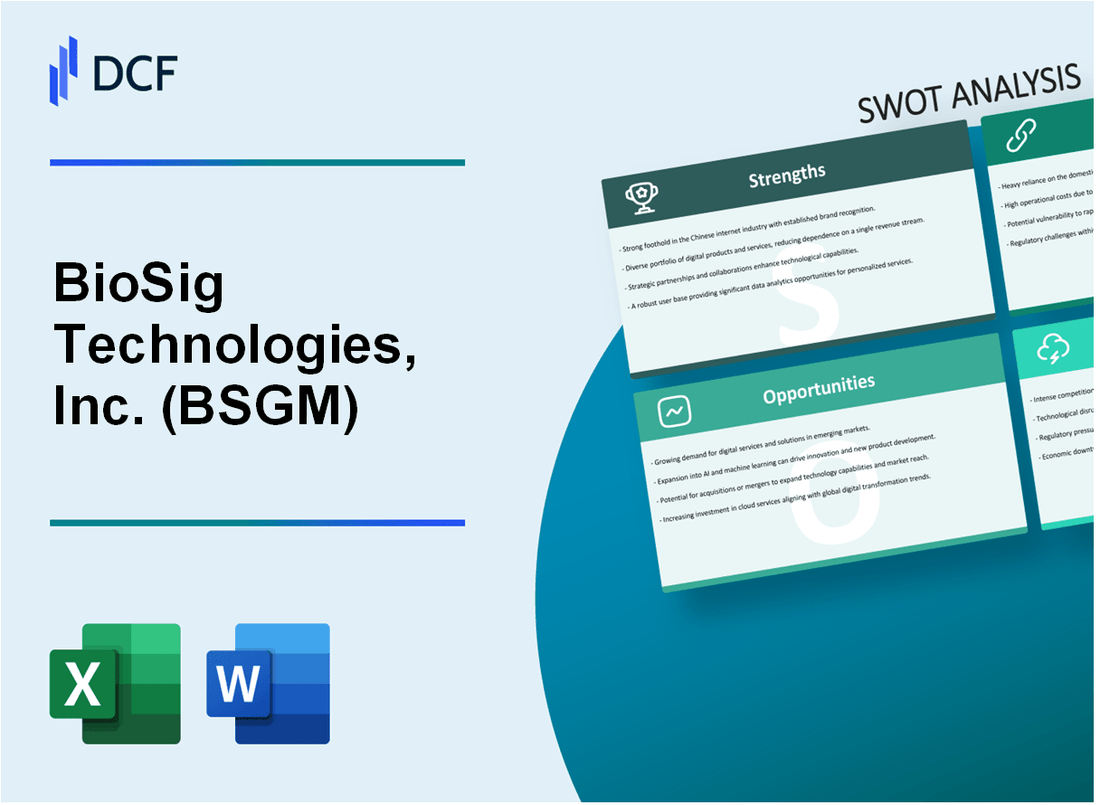
Biosig Technologies, Inc. (BSGM): Análise SWOT [Jan-2025 Atualizada] |
Totalmente Editável: Adapte-Se Às Suas Necessidades No Excel Ou Planilhas
Design Profissional: Modelos Confiáveis E Padrão Da Indústria
Pré-Construídos Para Uso Rápido E Eficiente
Compatível com MAC/PC, totalmente desbloqueado
Não É Necessária Experiência; Fácil De Seguir
BioSig Technologies, Inc. (BSGM) Bundle
No cenário em rápida evolução da tecnologia médica, a Biosig Technologies, Inc. (BSGM) surge como um participante atraente em eletrofisiologia cardíaca, alavancando seu Tecnologia de processamento de sinal proprietário potencialmente revolucionar a precisão diagnóstica. Essa análise SWOT revela o posicionamento estratégico da Companhia, explorando como sua abordagem inovadora, conhecimentos de nicho e propriedade intelectual robusta podem transformar o monitoramento cardiovascular enquanto navega em desafios complexos de mercado e fronteiras tecnológicas.
Biosig Technologies, Inc. (BSGM) - Análise SWOT: Pontos fortes
Tecnologia de processamento de sinal proprietário
A plataforma de processamento de sinal EP ™ da Biosig Technologies representa um Avanço no monitoramento de eletrofisiologia cardíaca. A tecnologia permite a aquisição e análise de sinais de alta fidelidade com recursos superiores de redução de ruído.
| Parâmetro de tecnologia | Especificação |
|---|---|
| Resolução do sinal | Até 40.000 amostras por segundo |
| Redução de ruído | Mais de 95% de melhoria em comparação com os sistemas convencionais |
| Status de patente | Múltiplas patentes ativas protegendo a tecnologia central |
Experiência focada em soluções de diagnóstico cardíaco
A empresa demonstra conhecimento especializado no desenvolvimento de tecnologias de diagnóstico cardíaco de precisão.
- Equipe de pesquisa dedicada com extenso histórico de eletrofisiologia
- Foco direcionado em detecção complexa de arritmia cardíaca
- Colaboração com as principais instituições de pesquisa cardíaca
Posicionamento do mercado de nicho
Tecnologias de Biosig ocupa um segmento especializado em tecnologia médica cardiovascular com diferenciação tecnológica única.
| Segmento de mercado | Tamanho de mercado | Potencial de crescimento |
|---|---|---|
| Diagnóstico de eletrofisiologia cardíaca | US $ 4,3 bilhões até 2025 | CAGR de 6,2% |
Portfólio de propriedade intelectual
A empresa mantém uma estratégia de propriedade intelectual robusta que protege suas inovações tecnológicas.
| Categoria IP | Número de ativos |
|---|---|
| Patentes ativas | 12 patentes emitidas |
| Aplicações de patentes | 8 Aplicações pendentes |
| Cobertura geográfica | Estados Unidos, União Europeia, Japão |
Biosig Technologies, Inc. (BSGM) - Análise SWOT: Fraquezas
Receita limitada e desafios financeiros em andamento
A Biosig Technologies relatou receita total de US $ 0,79 milhões para o ano fiscal de 2022, com um prejuízo líquido de US $ 14,6 milhões. As demonstrações financeiras da empresa indicam desafios consistentes na geração de receita substancial.
| Métrica financeira | 2022 Valor | 2021 Valor |
|---|---|---|
| Receita total | US $ 0,79 milhão | US $ 0,62 milhão |
| Perda líquida | US $ 14,6 milhões | US $ 12,3 milhões |
Pequena capitalização de mercado e possíveis restrições de financiamento
Em janeiro de 2024, a Biosig Technologies possui uma capitalização de mercado de aproximadamente US $ 16,5 milhões, o que apresenta limitações significativas de financiamento.
- A capitalização de mercado abaixo de US $ 50 milhões indica possíveis desafios na criação de capital
- Recursos financeiros limitados podem restringir o desenvolvimento e expansão da tecnologia
Dependência da comercialização bem -sucedida das tecnologias principais
A tecnologia principal da empresa, a aquisição de sinais Pure EP ™ e o sistema Intelligencer, permanece em estágio de desenvolvimento sem tração comercial significativa.
| Estágio de desenvolvimento de tecnologia | Status |
|---|---|
| Sistema Pure EP ™ | Estágio pré-comercial |
| Validação clínica | Pesquisa em andamento |
Altas despesas de pesquisa e desenvolvimento em relação à receita atual
A Biosig Technologies investiu US $ 11,2 milhões em despesas de pesquisa e desenvolvimento para o ano fiscal de 2022, superando significativamente sua geração mínima de receita.
| Categoria de despesa | 2022 quantidade | Porcentagem de receita |
|---|---|---|
| Despesas de P&D | US $ 11,2 milhões | 1.416% da receita |
| Receita total | US $ 0,79 milhão | N / D |
Principais indicadores de fraqueza financeira:
- Fluxo de caixa continuamente negativo
- Alta taxa de queima em pesquisa e desenvolvimento
- Portfólio de produtos comerciais limitados
Biosig Technologies, Inc. (BSGM) - Análise SWOT: Oportunidades
Crescente demanda por tecnologias avançadas de diagnóstico cardíaco
O mercado global de dispositivos de monitoramento cardíaco foi avaliado em US $ 14,4 bilhões em 2022 e deve atingir US $ 23,5 bilhões até 2030, com um CAGR de 6,3%.
| Segmento de mercado | 2022 Valor | 2030 Valor projetado |
|---|---|---|
| Dispositivos de monitoramento cardíaco | US $ 14,4 bilhões | US $ 23,5 bilhões |
Expansão potencial no mercado de monitoramento de eletrofisiologia
As oportunidades de mercado de eletrofisiologia incluem:
- O mercado global de eletrofisiologia deve atingir US $ 7,2 bilhões até 2027
- Procedimentos de eletrofisiologia cardíaca aumentando a 7,2% de taxa de crescimento anual
- Avanços tecnológicos que impulsionam a expansão do mercado
Aumentar o investimento em tecnologia da saúde e as tendências de saúde digital
Os investimentos em saúde digital demonstram potencial de mercado significativo:
| Categoria de investimento | 2022 Investimento | 2023 Investimento projetado |
|---|---|---|
| Investimentos em saúde digital | US $ 15,3 bilhões | US $ 18,7 bilhões |
Possíveis parcerias estratégicas com empresas de dispositivos médicos maiores
Oportunidades potenciais de parceria no setor de dispositivos médicos:
- Participação de mercado de dispositivos cardiovasculares da Medtronic: 29%
- Receita de eletrofisiologia da Boston Scientific: US $ 4,1 bilhões em 2022
- Segmento de dispositivos médicos dos Laboratórios Abbott: Receita Anual de US $ 11,6 bilhões
Biosig Technologies, Inc. (BSGM) - Análise SWOT: Ameaças
Concorrência intensa no setor de tecnologia médica
O setor de tecnologia médica mostra uma pressão competitiva significativa, com o mercado global de dispositivos médicos projetados para atingir US $ 603,5 bilhões até 2027, crescendo a um CAGR de 5,4%.
| Concorrente | Segmento de mercado | Receita anual estimada |
|---|---|---|
| Medtronic | Dispositivos cardíacos | US $ 30,1 bilhões |
| Boston Scientific | Eletrofisiologia | US $ 12,4 bilhões |
| Laboratórios Abbott | Dispositivos médicos | US $ 25,3 bilhões |
Processos complexos de aprovação regulatória da FDA
As estatísticas de aprovação de dispositivos médicos da FDA demonstram desafios significativos:
- Média FDA 510 (K) Tempo de folga: 177 dias
- O processo de aprovação do pré-mercado (PMA) leva de 3 a 7 anos
- Taxa de sucesso de aprovação: aproximadamente 33% para dispositivos médicos complexos
Possíveis desafios de reembolso
O cenário de reembolso do seguro de saúde apresenta obstáculos substanciais:
| Categoria de reembolso | Taxa de negação | Tempo médio de processamento |
|---|---|---|
| Dispositivos médicos inovadores | 42% | 93 dias |
| Reivindicações de tecnologia emergentes | 55% | 126 dias |
Incertezas econômicas
As tendências de investimento de dispositivos médicos indicam volatilidade significativa:
- Os investimentos globais de capital de dispositivos médicos diminuíram 26% em 2023
- O tamanho médio de negócios reduziu de US $ 25,7 milhões para US $ 18,3 milhões
- O financiamento de risco para tecnologias médicas em estágio inicial caiu 35%
Avanços tecnológicos rápidos
A evolução da tecnologia requer investimento e adaptação contínuos:
| Área de tecnologia | O investimento anual de P&D é necessário | Ciclo de inovação |
|---|---|---|
| Tecnologias de monitoramento cardíaco | US $ 15-22 milhões | 18-24 meses |
| Inovações de eletrofisiologia | US $ 20 a 30 milhões | 12-18 meses |
BioSig Technologies, Inc. (BSGM) - SWOT Analysis: Opportunities
You're looking at BioSig Technologies, Inc. (BSGM) at a pivotal moment. The company's strategic pivot from a capital-intensive MedTech model to a high-growth FinTech focus on Real-World Asset (RWA) tokenization is not just a change; it's a wholesale business transformation. The opportunities are massive, grounded in a first-mover advantage in regulated digital assets and analysts projecting a 73.3% increase in company earnings for 2025, driven by this shift.
Accessing the massive $142 trillion commodities market through Real-World Asset (RWA) tokenization.
The biggest opportunity is simply the addressable market. By merging with Streamex Exchange Corporation, BioSig is now focused on bringing the global commodities market on-chain through RWA tokenization (converting physical assets into digital tokens on a blockchain). This commodity market is valued at approximately $142 trillion globally, and the FinTech play gives the company a direct line to it.
The RWA tokenization market itself is exploding. It reached $24 billion in 2025 and is projected to hit a bullish $50 billion market cap by the end of the year, showing incredible momentum. Streamex is positioning itself to be one of the first Nasdaq-listed companies to issue regulated RWA tokens, which is a critical first-mover advantage (a significant first-mover advantage) in the U.S. market. This move is all about building institutional-grade infrastructure for a market that Boston Consulting Group (BCG) projects could reach $18.9 trillion by 2030.
Strategic partnerships to develop tokenized, yield-bearing gold products (e.g., with Monetary Metals).
The company has already executed a key partnership to capitalize on the $22 trillion global gold market. In September 2025, Streamex announced an exclusive three-year strategic partnership with Monetary Metals to develop a tokenized, yield-bearing gold product. This is a smart move because it merges the stability of physical gold with the yield generation of a financial product.
This product targets an estimated 4% annual yield for investors, which is a strong draw in a low-yield environment. Streamex is not just a tokenization service; they will fund at least 10% of eligible Monetary Metals gold leases and receive a revenue share tied to the leasing volumes on the platform. That's a recurring revenue stream tied to real-world gold leasing, not just transaction fees.
| Metric | Value (2025 Data/Projection) | Strategic Implication |
|---|---|---|
| Global Commodities Market Size | Approximately $142 trillion | Massive, largely untapped market for RWA tokenization. |
| RWA Tokenization Market Cap | $24 billion (Current 2025) to $50 billion (Bullish EOY 2025) | High-growth sector with a 308% increase over three years. |
| Tokenized Gold Product Target Yield | Up to 4% annual yield | Competitive advantage against non-yielding gold bullion. |
| Analyst Projected Earnings Growth (2025) | 73.3% increase | Quantifiable validation of the FinTech pivot's immediate impact. |
Potential for high-margin software licensing as the PURE EP™ focus shifts to novel R&D algorithms.
The company's original MedTech asset, the PURE EP™ System, still holds latent value, even as the core business shifts. The PURE EP™ platform is essentially a highly advanced digital signal processing technology, an FDA 510(k) cleared device, with proprietary software features like the High Frequency Algorithm (HFA) and Automatic Tachycardia Characterization (ATC).
The opportunity here is to pivot the PURE EP™ business from a low-margin hardware sales and service model to a high-margin software licensing model. This means focusing R&D on the intellectual property (IP)-the algorithms-and licensing them to larger MedTech players. BioSig already has a collaboration with Mayo Clinic for a new R&D program to develop AI and machine learning technologies for the PURE EP™ System. That's pure, high-margin IP development.
- Monetize core algorithms like HFA and ATC.
- License AI/ML-powered software developed with Mayo Clinic.
- Reduce capital expenditure by shifting away from hardware manufacturing.
Rapid expansion into a new, high-growth FinTech sector without the slow FDA-driven MedTech cycle.
The FinTech pivot allows BioSig to bypass the notoriously slow, expensive, and cyclical nature of the medical device industry, which is heavily regulated by the U.S. Food and Drug Administration (FDA). The PURE EP™ System, for instance, required a 510(k) clearance. In contrast, the RWA tokenization market has seen a surge of 260% in 2025 alone, demonstrating a rapid adoption curve.
By acquiring a FINRA and SEC-registered broker-dealer, Streamex is establishing a compliant, regulated on-ramp for institutional capital. This regulatory compliance is the key to institutional adoption, and it's a much faster path to commercialization and scale than the years-long cycles of clinical trials and hospital adoption required for MedTech. The market is moving fast, and BioSig is now positioned to capture that velocity, which is why analysts are forecasting that substantial 73.3% earnings growth for the current fiscal year. It's a defintely a high-speed lane for growth.
BioSig Technologies, Inc. (BSGM) - SWOT Analysis: Threats
Extreme shareholder dilution risk from convertible debentures and equity offerings.
The most immediate threat to shareholder value is the substantial dilution risk baked into the recent $1.1 billion growth financing package secured in July 2025. This capital infusion, while necessary given the company's cumulative losses of approximately $294.1 million, is structured to create a massive stock overhang. The financing includes $100 million in senior secured convertible debentures and a $1 billion equity line of credit.
The terms of the convertible debentures are particularly punitive for existing shareholders. For instance, the conversion of just two initial $25 million tranches could result in the issuance of up to 26,556,194 shares. Considering the total shares outstanding were 148,610,687 as of November 17, 2025, this single conversion event represents a significant percentage increase in the share count. The conversion price is tied to a variable rate-specifically, 97.0% of the lowest daily volume-weighted average price (VWAP) in the days preceding conversion, albeit with a $4.00 per-share floor. This structure incentivizes conversion at lower prices, which defintely puts downward pressure on the stock.
| Financing Instrument | Maximum Amount (2025 FY) | Dilution Mechanism | Key Term / Risk |
|---|---|---|---|
| Senior Secured Convertible Debentures | Up to $100 million | Conversion into common stock at a variable price (min. $4.00 floor) | Potential issuance of over 26.5 million shares from initial $50M tranche. |
| Equity Line of Credit (ELOC) | $1.0 billion | Sale of new shares to the investor over time | Massive stock overhang risk; auditors have raised substantial doubt about the ability to continue as a going concern. |
Regulatory uncertainty in the nascent and rapidly evolving RWA tokenization market.
The pivot to Real-World Asset (RWA) tokenization via the Streamex platform introduces a new layer of regulatory risk that is hard to quantify. The RWA sector is nascent, and while Streamex is pursuing a strategic path-engaging Compliance Exchange Group (CXG) to acquire a FINRA and SEC-registered broker-dealer-it is not yet a fully regulated entity in the U.S. for its token issuance and trading model. This is a first-mover strategy, but first-movers often face the highest regulatory friction.
Any delay or adverse ruling from the SEC or FINRA on the classification of the gold-backed tokens as securities could halt the Streamex business model entirely. The company is banking on this regulatory compliance to be a key differentiator, but the final, clear rules for tokenizing the approximately $142 trillion global commodities market are still being written. You are betting on a regulatory outcome that is not guaranteed.
Recent governance instability, including the November 2025 resignations of three board directors.
A high volume of board departures, even if planned, can signal instability to the market. On November 18, 2025, three directors-Christopher Baer, Anthony Amato, and Steven Abelman-resigned from the board. While SEC filings suggest this was part of a planned transition following the May 2025 Share Purchase Agreement with Streamex, the optics are poor for a newly merged entity.
The departures include Anthony Amato, the former CEO, President, and Chairman of BioSig Technologies. This level of executive and board turnover in a single month can disrupt strategic continuity and investor confidence, especially when the company is simultaneously managing a major business pivot and a complicated financing structure.
Intense competition in both the MedTech space and the defintely crowded FinTech/blockchain sector.
The company now operates in two fiercely competitive markets, and it is a small player in both. In MedTech, the PURE EP™ System competes against established, well-capitalized giants in the electrophysiology market, which is projected to be worth $10.27 billion in 2025.
- MedTech Competition: PURE EP™ faces off against dominant players like Johnson & Johnson, Medtronic plc, and Boston Scientific Corporation. These companies have massive sales forces, established hospital relationships, and deep R&D budgets to push next-generation technologies like Pulsed Field Ablation (PFA), which is the fastest-growing sub-segment. The PURE EP™'s shift from commercial hardware to software R&D suggests a struggle for market penetration in a segment where the large device makers control the ecosystem.
- FinTech/Blockchain Competition: Streamex operates in the highly crowded RWA tokenization space. While it aims for a regulated first-mover advantage, it competes with well-funded blockchain projects and major financial institutions exploring tokenization, such as the partnership between Zhaojin Mining and Ant Financial in the gold tokenization space. Streamex must rapidly scale its platform and gold holdings to compete with the liquidity and trust offered by established financial players.
The next step is for the executive team to clearly articulate the capital allocation split between PURE EP™ R&D and the Streamex gold tokenization platform by the end of the year.
Disclaimer
All information, articles, and product details provided on this website are for general informational and educational purposes only. We do not claim any ownership over, nor do we intend to infringe upon, any trademarks, copyrights, logos, brand names, or other intellectual property mentioned or depicted on this site. Such intellectual property remains the property of its respective owners, and any references here are made solely for identification or informational purposes, without implying any affiliation, endorsement, or partnership.
We make no representations or warranties, express or implied, regarding the accuracy, completeness, or suitability of any content or products presented. Nothing on this website should be construed as legal, tax, investment, financial, medical, or other professional advice. In addition, no part of this site—including articles or product references—constitutes a solicitation, recommendation, endorsement, advertisement, or offer to buy or sell any securities, franchises, or other financial instruments, particularly in jurisdictions where such activity would be unlawful.
All content is of a general nature and may not address the specific circumstances of any individual or entity. It is not a substitute for professional advice or services. Any actions you take based on the information provided here are strictly at your own risk. You accept full responsibility for any decisions or outcomes arising from your use of this website and agree to release us from any liability in connection with your use of, or reliance upon, the content or products found herein.